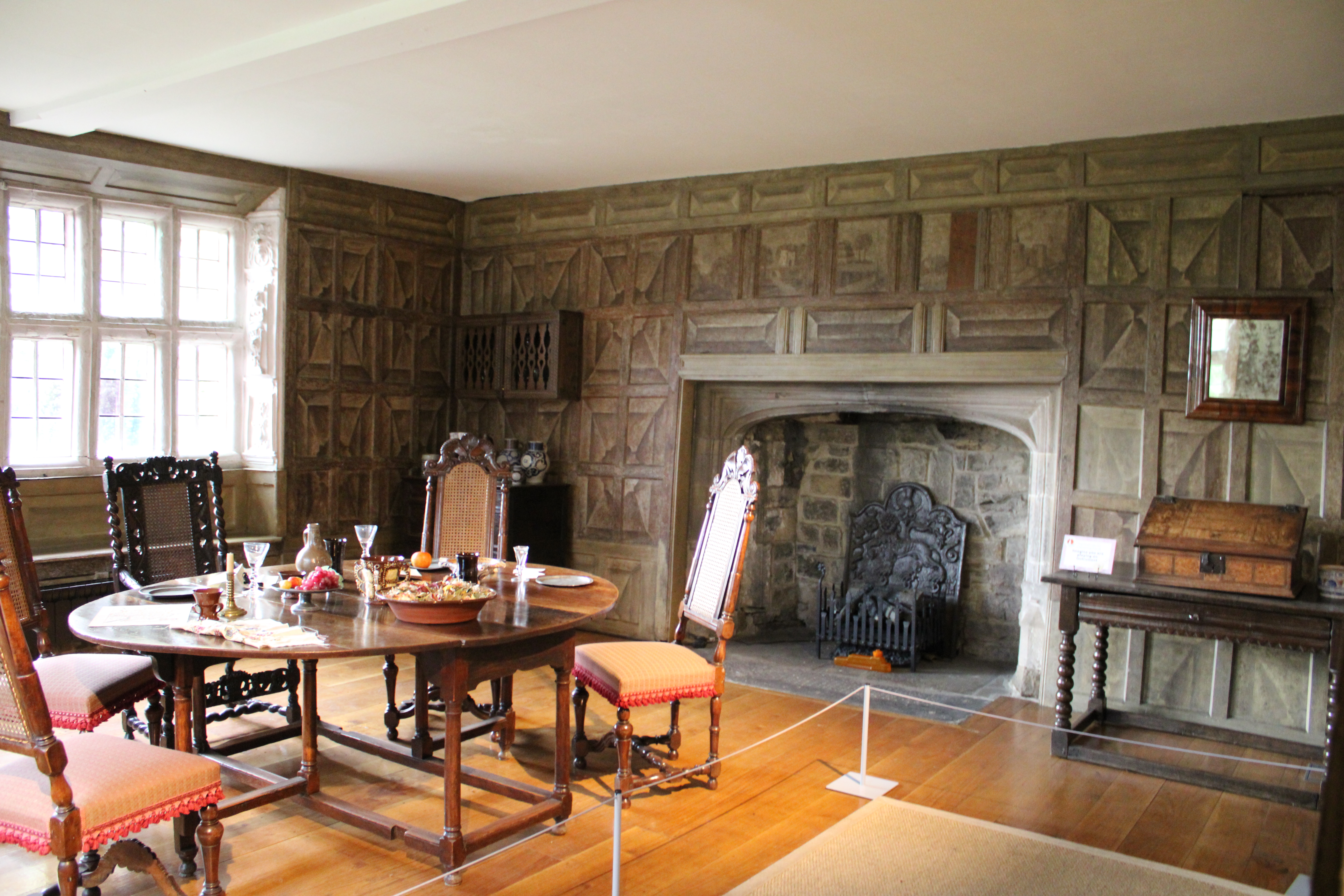
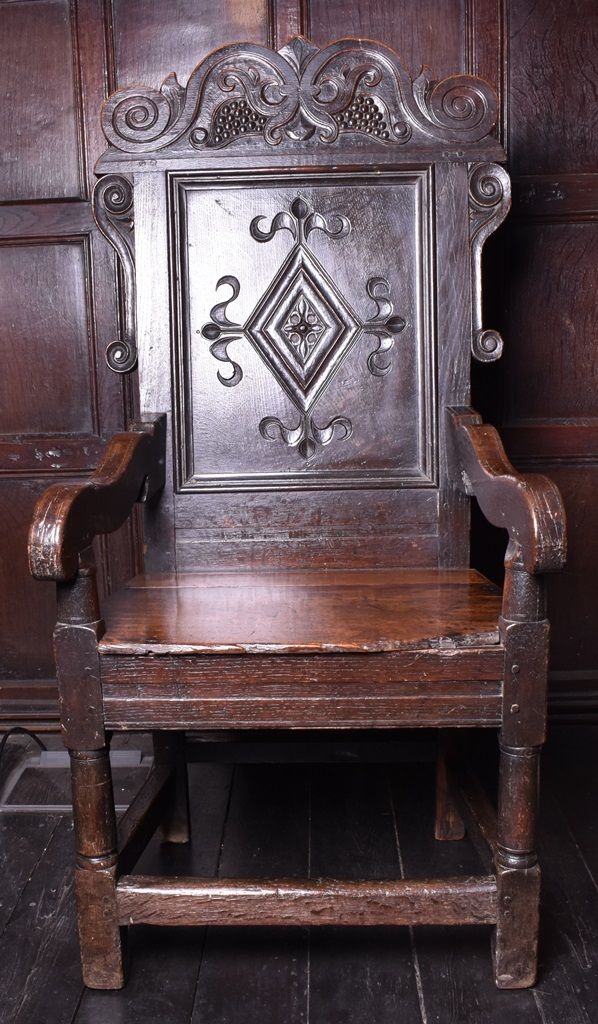
When John Batt built Oakwell Hall in 1583, it was designed to show the family’s rising status. The date of first part of construction, 1583, is carved above the porch doorway, along with John Batt’s initials. It was smaller than it looks today, without the big window at the front.
The Batt family had grown wealthy through their business in Halifax. Henry was a trained lawyer and land agent for wealthier families. John his son was also a trained lawyer. Buying the manor of Oakwell, with land in Heckmondwike, Gomersal and Heaton, marked their new importance.
John Batt employed local builders and used local materials, such as stone and oak. The building was put up in stages: the central hall came first, followed by the West Wing a few years later. Inside, the house combines stone walls with heavy timber framing. For many years people thought this was an older timber house hidden inside stone walls, but scientific testing of the wood has shown that it was always built this way. The huge roof beams over the Great Hall were cut down in spring 1583, while the West Wing timbers were added in 1586, including some reused wood from 1501.
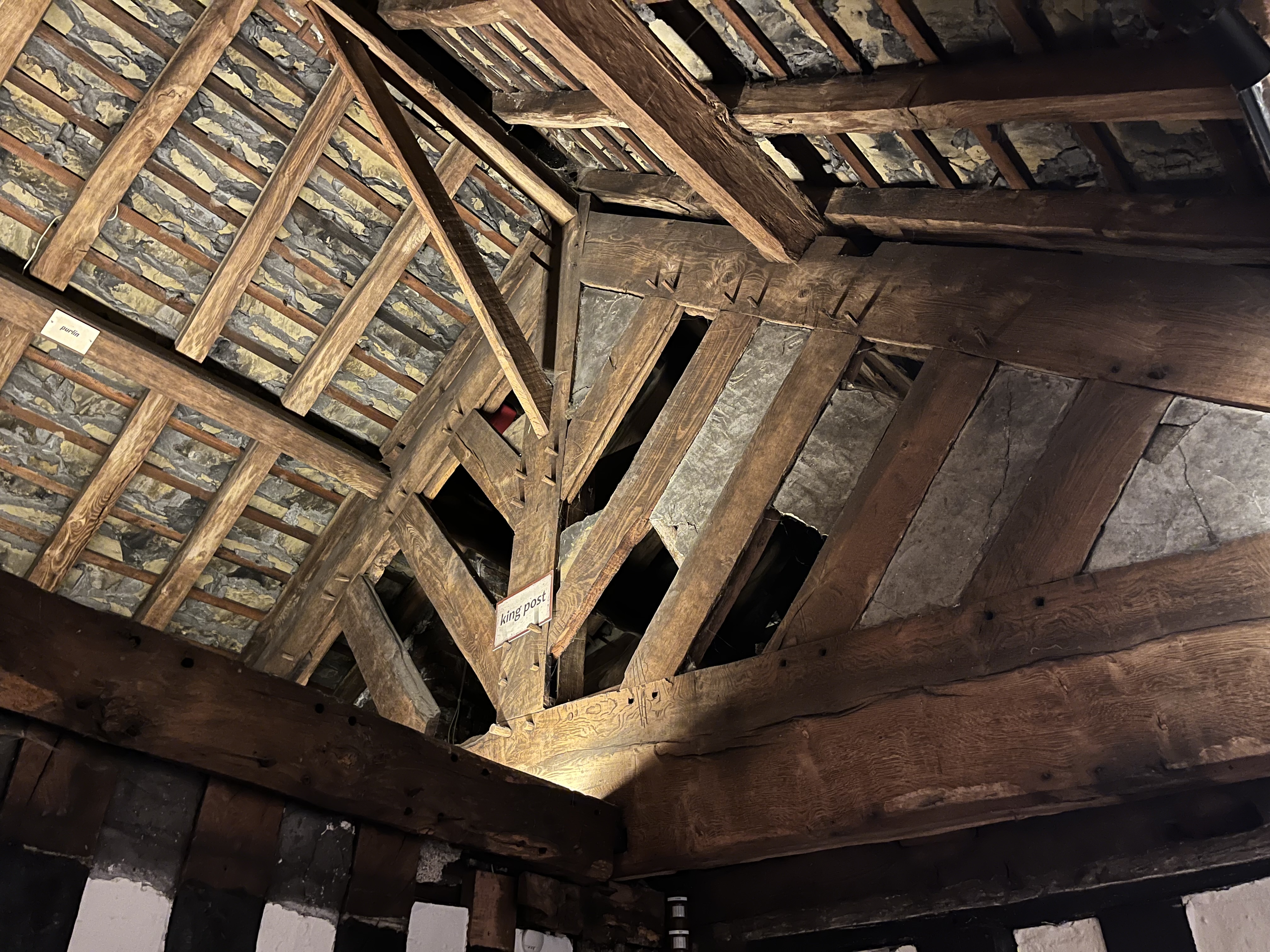
The design of Oakwell Hall was a mix of local Yorkshire tradition and fashionable Elizabethan style. It has a central hall with wings at each end, and a cross passage leading from the porch through the building. The Great Hall was the main space, and records from 1611 show there was once a room above it that no longer survives. Even the stone Tuscan columns in the hall were fashionable at the time, made popular by the Elizabethan architect Robert Smythson.
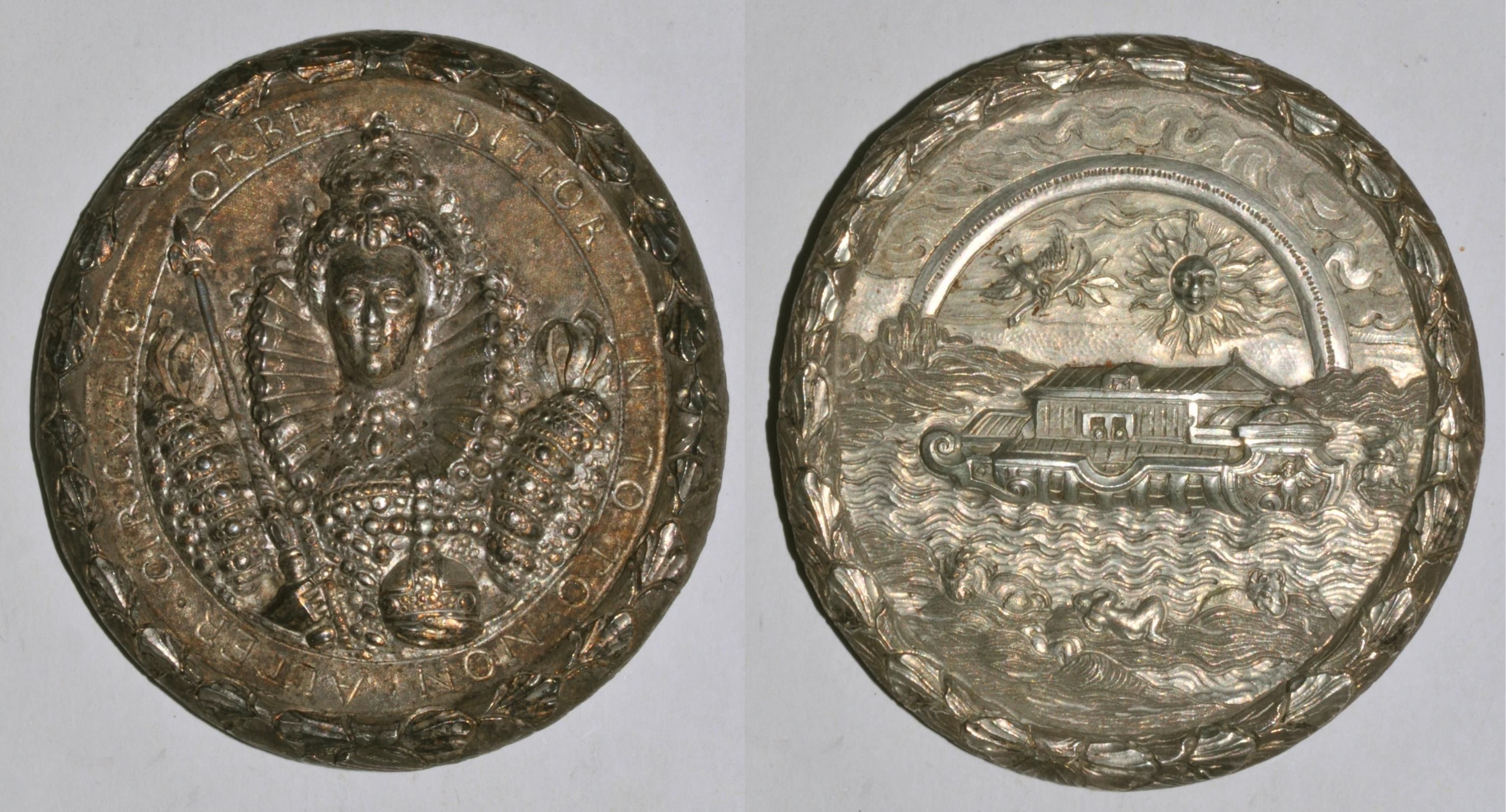
The hall soon became a symbol of the Batts’ place among the leading families of the area. Several of John Batt’s sons went to university. A surviving letter from Robert Batt, written in 1595 while studying at Oxford, gives us a glimpse of student life. He wrote about a smallpox outbreak that forced many scholars to return home and complained about the high price of food. He also shared exciting national news - that Captain Hawkins, a famous Elizabethan sailor, had captured Spanish treasure and was sending it safely back to Queen Elizabeth.
A letter of 1595 written by Robert Batt, whilst at university in Oxford, to his father “the smallpox do still continue amongst us and do endanger many, whereupon most of our scholars are sent home on to their friends.” He also mentioned Captain Hawkins the infamous Elizabethan seafarer who brought treasure captured from Spanish ships home to his delighted Queen Elizabeth. News had just reached England that “he has met with the Spanish revenues out of the Indies and hath sent aid to bring him home safely with it”.
The story of the Batt family and Oakwell Hall shows what life was like in Elizabethan England. The Batts grew from local businesspeople into landowners, but this was not easy. Their rise depended on social connections and money often gained through exploitation of others.
Building Oakwell Hall in 1583 reflected the Batt family’s growing wealth and social status. The house was constructed from local Yorkshire materials but included fashionable Elizabethan features, which shows how architectural trends spread to the gentry. Several of the Batt sons also attended university, and this was a clear sign of the family’s privilege at the time. Letters from Robert Batt reveal that even wealthy students faced difficulties, such as smallpox outbreaks and the high cost of food.
His letter shows how even people in Yorkshire were aware of national events, such as sailors like Captain Hawkins bringing treasure back from Spain. Altogether, the source reveals the importance of the Batt family locally, and highlights wider changes in Elizabethan England, including new fashions, education, global connections, and opportunities for ambitious families to rise in status.
Life in the hall
The records from Oakwell Hall give us fascinating clues about life on the estate in the early 1600s. In 1603, John Batt wrote a set of Court Baron Orders, which acted like rules for his tenants. These orders included fines if rules were broken, such as cutting down or stealing wood, breaking hedges, or hunting the Lord’s rabbits. Anyone caught poaching rabbits could be fined as much as three shillings and four pence – around £50 in today’s value.
The Court Baron Orders of John Batt written in 1603 “No man was to break any man's hedge, cut, burn or carry away any wood”
The estate account book from 1609–1612 gives us a picture of daily life and work. Men were usually paid about seven pence a day (around £6.80), while women earned around four pence (around £4.50). Despite this lower pay, women often did equally hard or even heavier work. They helped indoors with cleaning and washing but also worked outdoors alongside men, sowing crops, spreading manure, hedging, and harvesting. The difference in pay shows the structural inequality of the time, as women’s work was valued less simply because of their gender, not the effort involved.
The steward of the estate, John Matteson, also kept detailed accounts of money spent on trips to buy provisions, livestock, or repair equipment. He had to record every penny carefully, though sometimes he noted more personal details - like the time he overspent while drinking wine and beer with friends, which cost him eleven pence! His records also tell us about the local community. For example, in one entry he recorded a hurried journey to Wakefield to fetch a midwife, which cost six pence, and another trip two days later to take her home again.
Finally, an inventory made in 1611 gives us a glimpse into the Batt family’s possessions. Robert Batt, who owned Oakwell but lived in Wiltshire, recorded what was left in the house when he leased it to relatives, the Waterhouse family. The list included sixty-two books and ten maps, a sign of Robert’s education and wealth. The maps covered the world, Europe, Asia, Africa, and even the universities of Oxford and Cambridge, showing that the Batts’ interests and outlook stretched far beyond Yorkshire.