Free learning resources from arts, cultural and heritage organisations.

Previous section
Introduction

Belief

Our beliefs about the world shape our attitudes towards death. Some cultures believe that we continue to exist after death in some form, often connected to ideas of an afterlife or reincarnation. Sometimes the afterlife is considered as important as this mortal life where death is viewed as a transition from one state of being to another, usually determined by a person’s behaviour in life. 
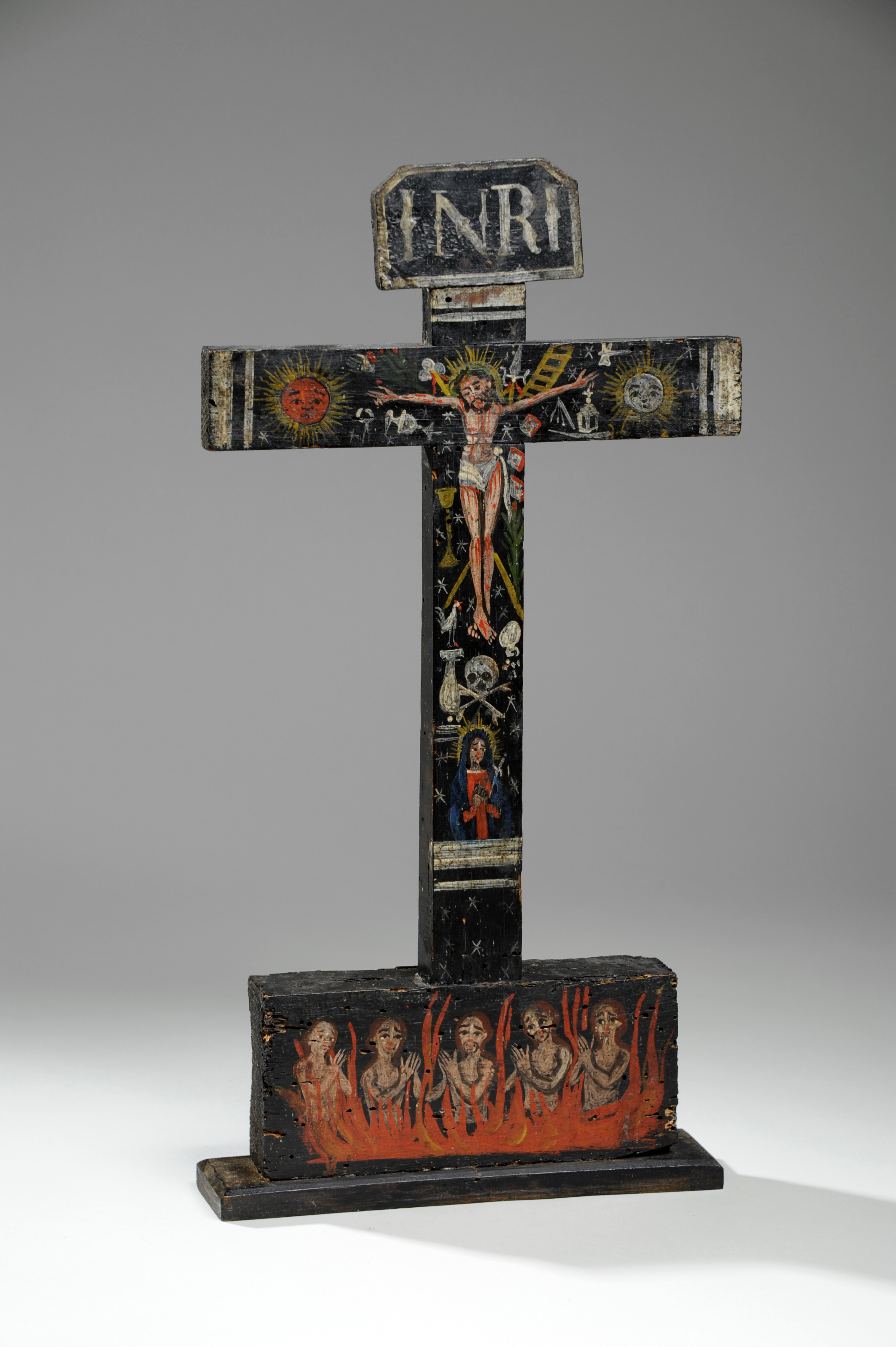
A painted wooden crucifix in a folk art style, featuring the crucified Jesus at the center with a golden halo and the inscription "INRI" above his head. Surrounding Jesus are symbolic elements including the sun, moon, stars, a ladder, and skull imagery. Below the crossbar, a depiction of the Virgin Mary or a saint is painted, while the base shows six anguished, nude figures with raised hands engulfed in stylised red and orange flames, symbolising purgatory or hell. The entire piece is painted on a black background with white star motifs and bordered in distressed wood tones.
Mexican Wooden Cross

[3D Scan - Boy Burning in Purgatory figure, Day of the Dead figure, Maori ancestor figure, Death of the Buddha) ]


In some cultures deceased ancestors are believed to still have influence in this world. The living maintain their bonds with the deceased through offerings, which ensure the wellbeing of the dead and their continued good-will towards the living. 
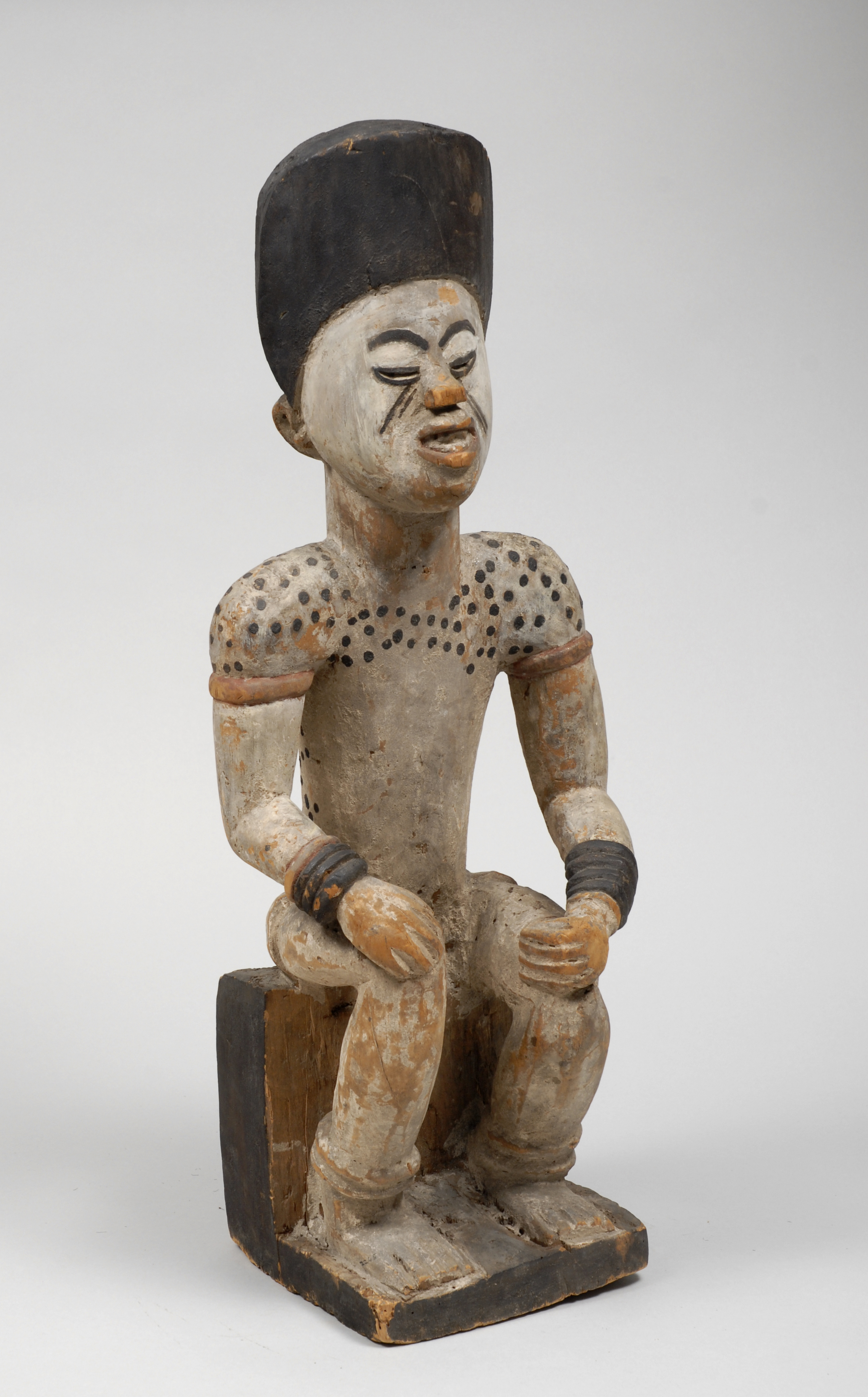
 

A wooden sculpted figure of a man sitting down with his hands on his knees. His shoulders have a black spot pattern.  He has black bangles on both wrists, and tall black painted hair. The rest of the sculpture is brown wood colour.
Ancestor Figure


Many people, however, do not believe in an afterlife. 42% of people in the UK do not think there is any form of life after death (YouGov, 2021). 
 

What do you believe about what happens after death?