After the Second World War, people in Kirklees, as across Britain, enjoyed more free time and disposable income. This shift sparked a boom in culture and leisure, reshaping daily life and providing new opportunities for entertainment and social engagement.
Celebrations
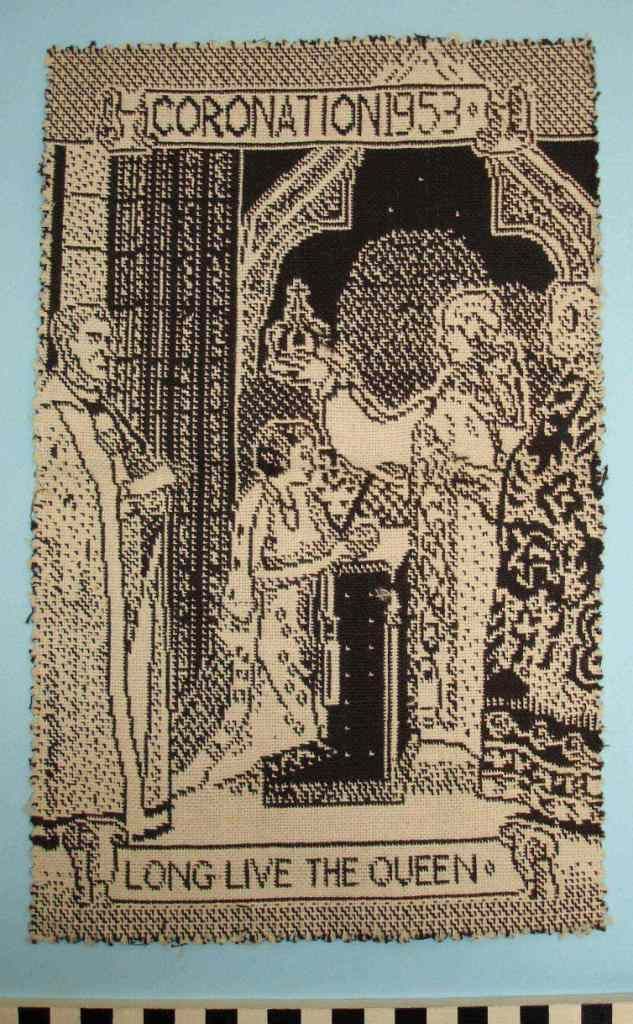
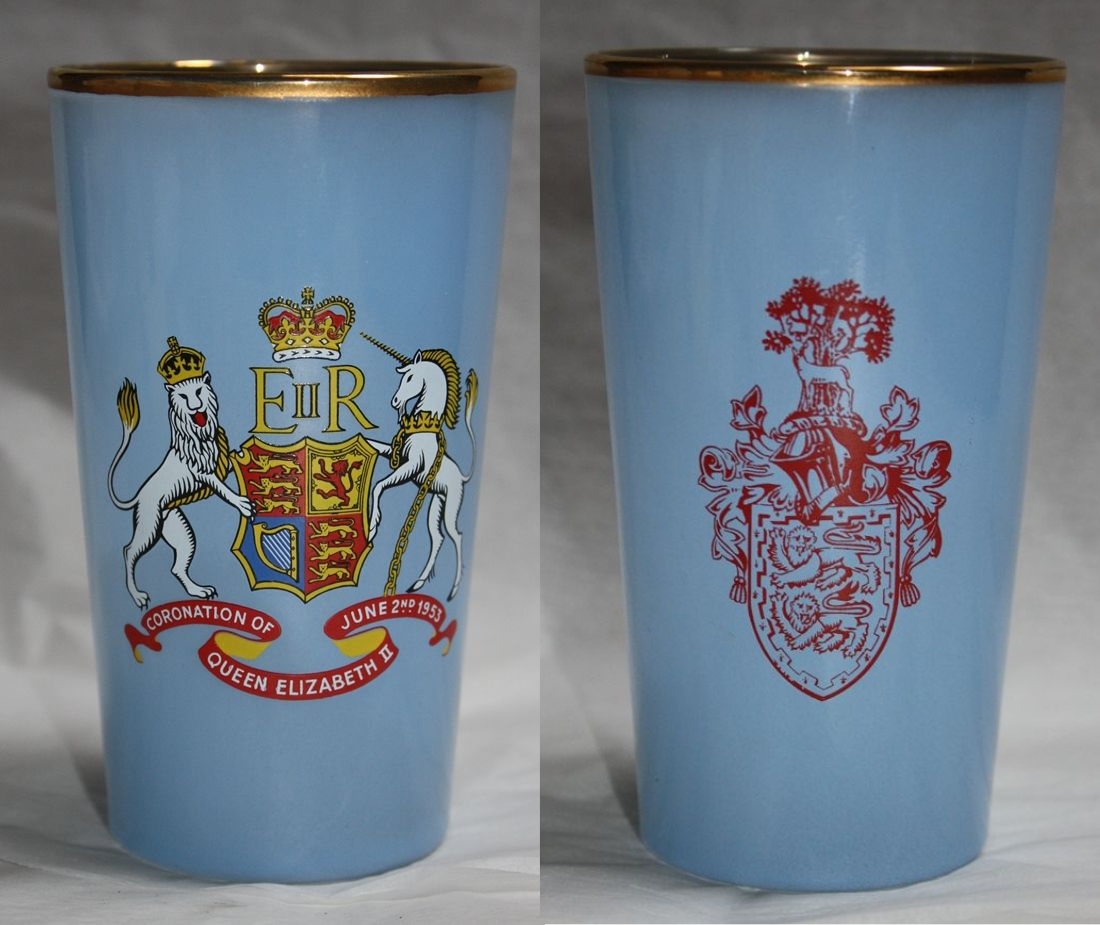
Like all communities across the country, Kirklees marked Queen Elizabeth II’s coronation with street parties and celebrations. These gatherings allowed neighbours to share food, music, and joy.
From the Log Book of the Barley Carr Council Infants’ School
West Yorkshire Archive Service [WYK1927/3]
Entry from May 21st 1953: “We had our Coronation Celebrations today. Our rooms have been gaily decorated for the past week. Yesterday, Coronation tumblers and brochures were distributed, and we had a party this afternoon when ‘Coronation cake’, cordials, jellies, sweets, oranges and biscuits were much enjoyed”
The Rise of Youth Culture
In the 1950s, a distinct social group emerged: the teenager. Previously, young people were expected to move straight from school into work with limited independence.
Post-war economic growth, rising wages, and the explosion of popular music granted teenagers unprecedented freedom and influence.
Nationally, this translated into increased spending on clothes, records, and leisure activities, and a youth culture began to flourish.
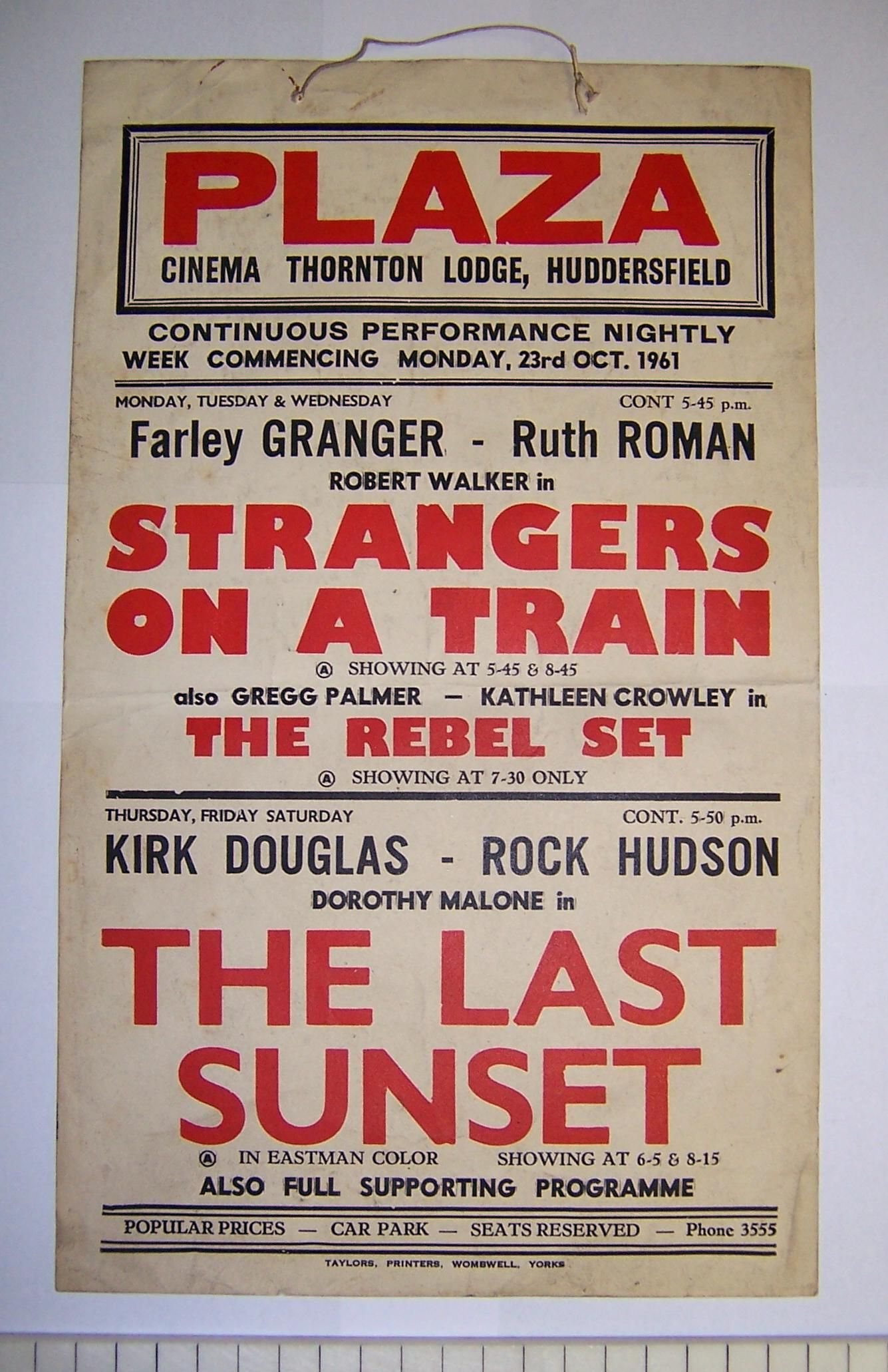
Locally, teenagers in Kirklees gravitated towards cinemas, dance halls, and clubs. Rock ’n’ roll music, scooters, and the practice of going out with friends became defining features of adolescence. These developments marked a sharp departure from earlier generations, giving young people a stronger voice in shaping the town’s culture.
Kirklees became a hub for emerging subcultures. Huddersfield played a role in Britain’s punk movement, with bands such as The Prisoners performing alongside major acts like The Damned, Adam and the Ants, and Generation X. Huddersfield venues, including the Eros Club, Parish Dive Bar, Star Bar, and Town Hall, hosted punk and punk-rock performances from the 1970s onwards, fostering a vibrant local music scene and a unique youth identity.
Cinemas, theatres, and dance halls remained central to social life. In Huddersfield, Dewsbury, and Batley, these venues brought entertainment to both young and old. A notable highlight was The Beatles’ performance at the ABC Cinema in Huddersfield on 29 November 1963, which brought the excitement of the global music scene directly to the town.
Nightlife and the Batley Variety Club
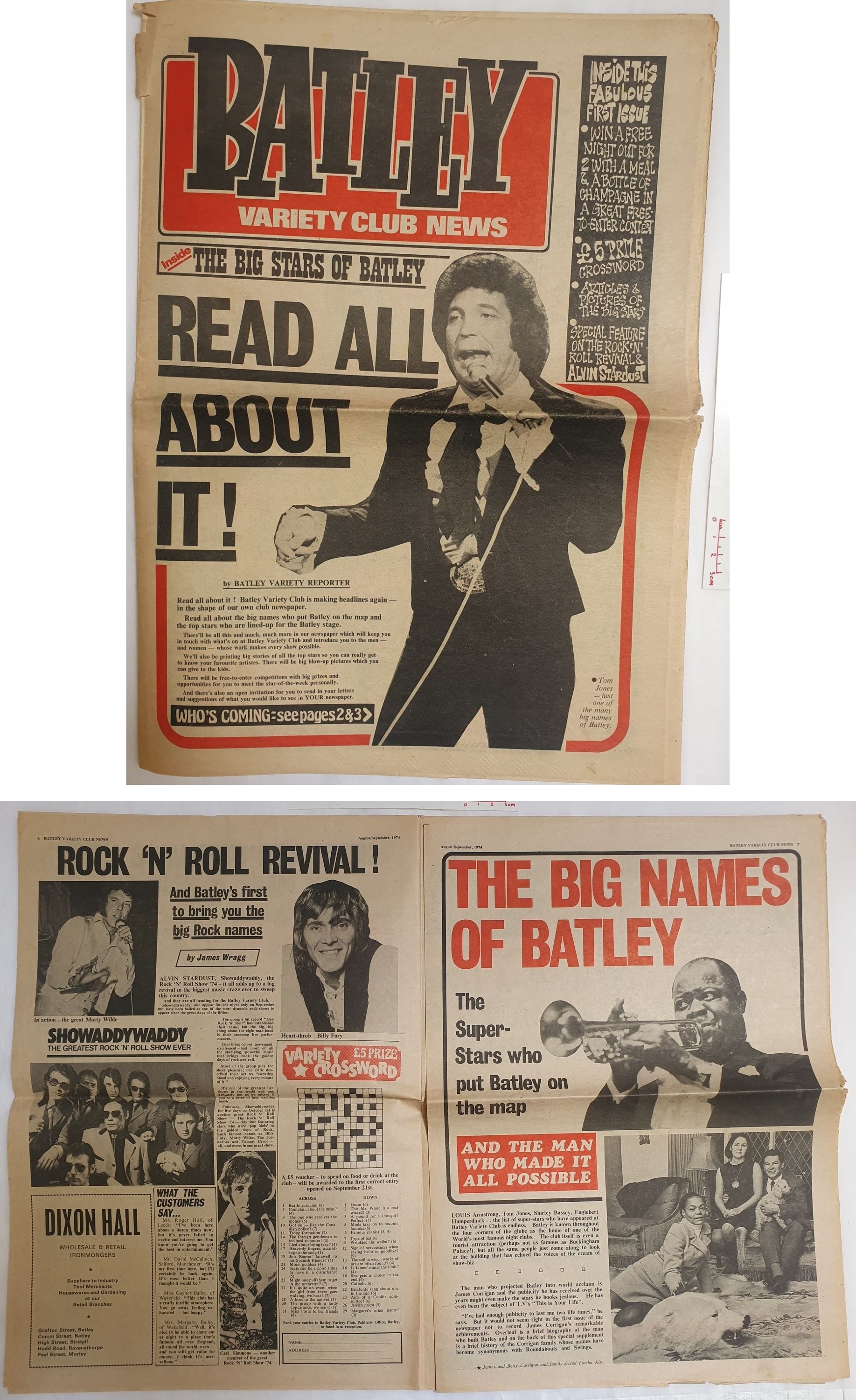
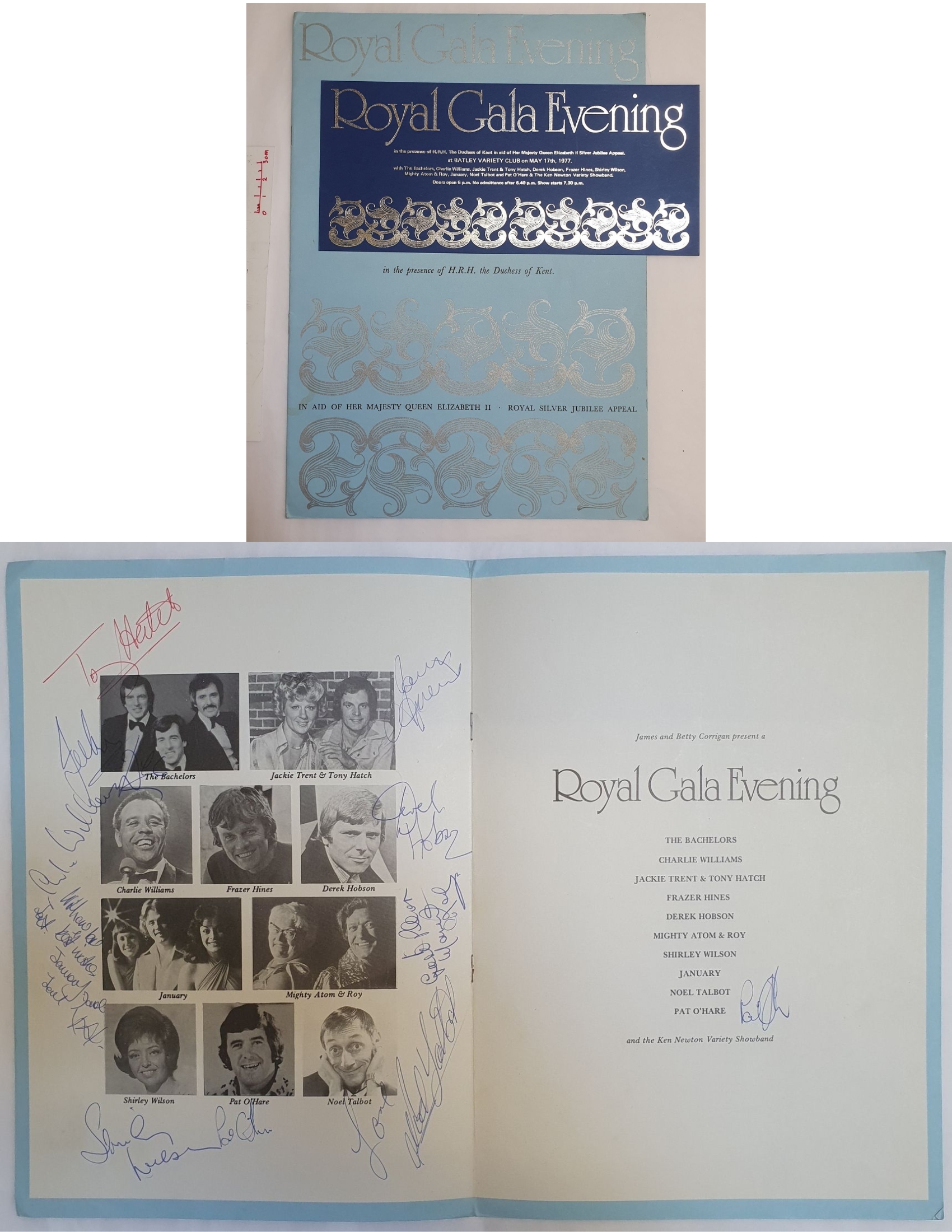
Batley gained national fame for the Batley Variety Club, opened in 1967 by James and Betty Corrigan. It hosted stars such as Shirley Bassey, Louis Armstrong, and Tom Jones, and drew audiences from across the country. At its peak, the club had over 300,000 members, symbolising the growing importance of leisure and nightlife in post-war Britain. As Batley resident Raymond Lockwood recalled:
“They’d come from all over England to t’Variety Club. It were t’most famous club. It were voted the best club in England for a good few years were Batley Variety Club. It were really good” Raymond Lockwood, Batley resident
Sports
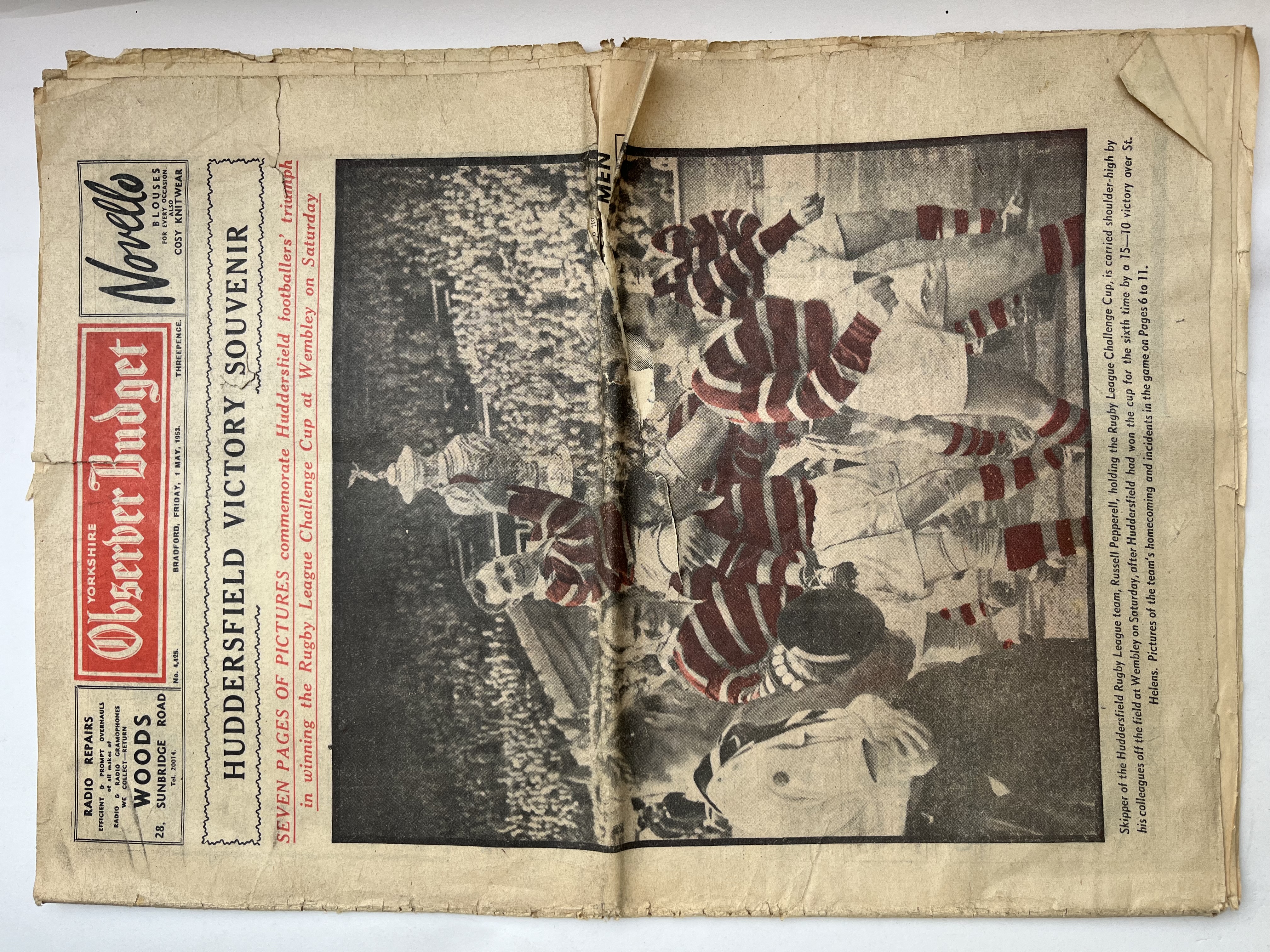
Sport remained a cornerstone of local culture. Football, rugby, and cricket clubs strengthened, fostering community pride and identity. Huddersfield is recognised as the birthplace of rugby league. The club now known as the Huddersfield Giants was one of the founding rugby league clubs; at the time of their earlier successes, they were simply called Huddersfield. The team won the League Championship seven times and the Challenge Cup six times. Notably, they claimed victory in the Challenge Cup final at Wembley Stadium on 2 June 1953, the same day as Queen Elizabeth II’s coronation.
Founded in 1883, the Heavy Woollen District Cricket Challenge Cup is the country’s oldest continuously played club competition, even the Ashes paused during the world wars. For many years, it was limited to 32 clubs within 18 miles of Batley Town Hall, which kept the competition small and local. Over time, this restriction contributed to a decline in participation, but after World War Two, the competition was revitalised by the passion and support of the local South Asian community.