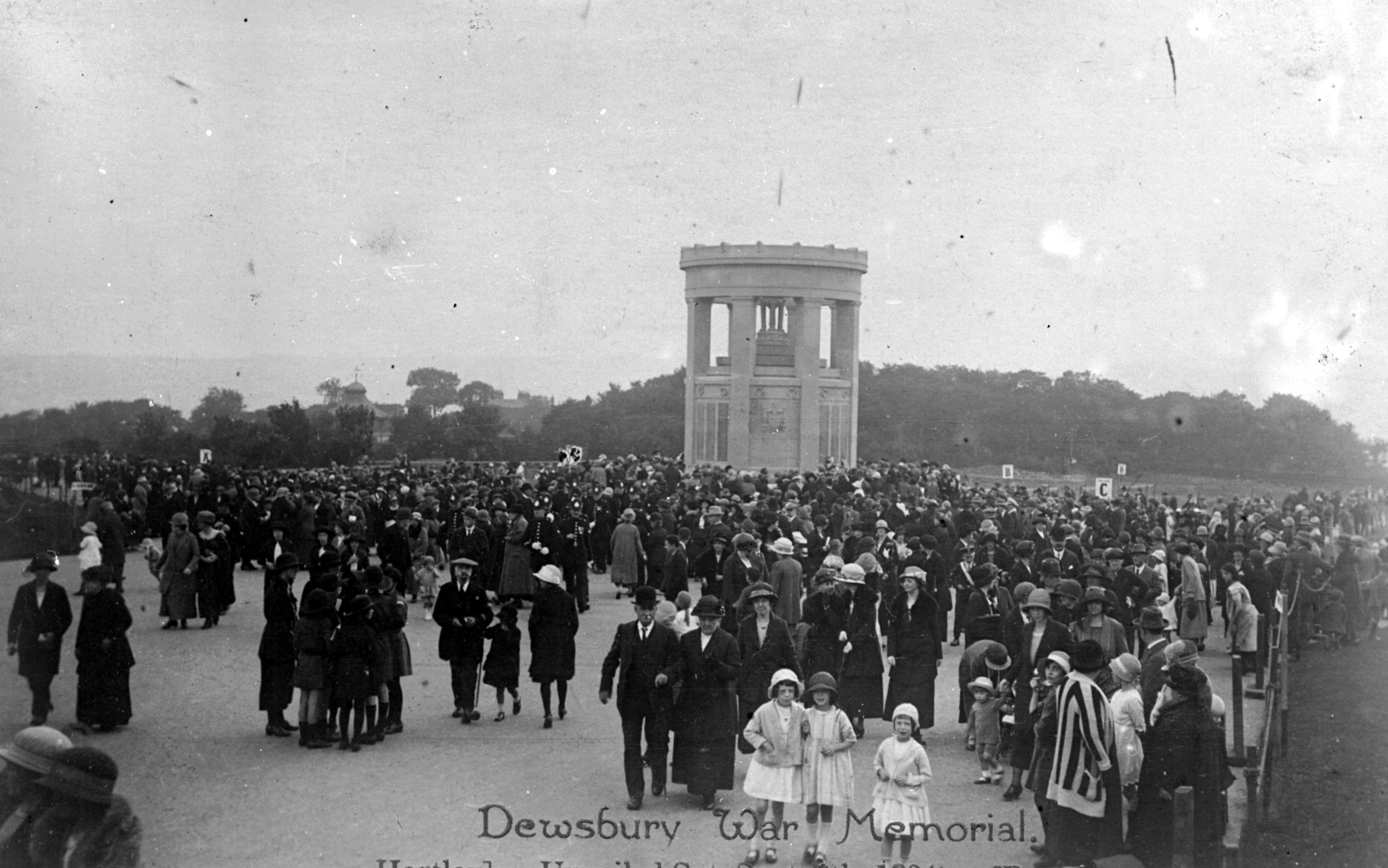
After the First World War ended in 1918, communities across Kirklees wanted to remember the men and women who had served and those who had lost their lives. Memorials were built as places where people could come together to honour their sacrifice and reflect on the impact of the war.
One important memorial is the Huddersfield Cenotaph, located in St Peter’s Gardens in the town centre. It was unveiled in 1920 and is a place where people gather every year on Remembrance Sunday to lay wreaths and remember those who fought in the war. The cenotaph is a powerful symbol of loss and hope, reminding everyone of the cost of war.
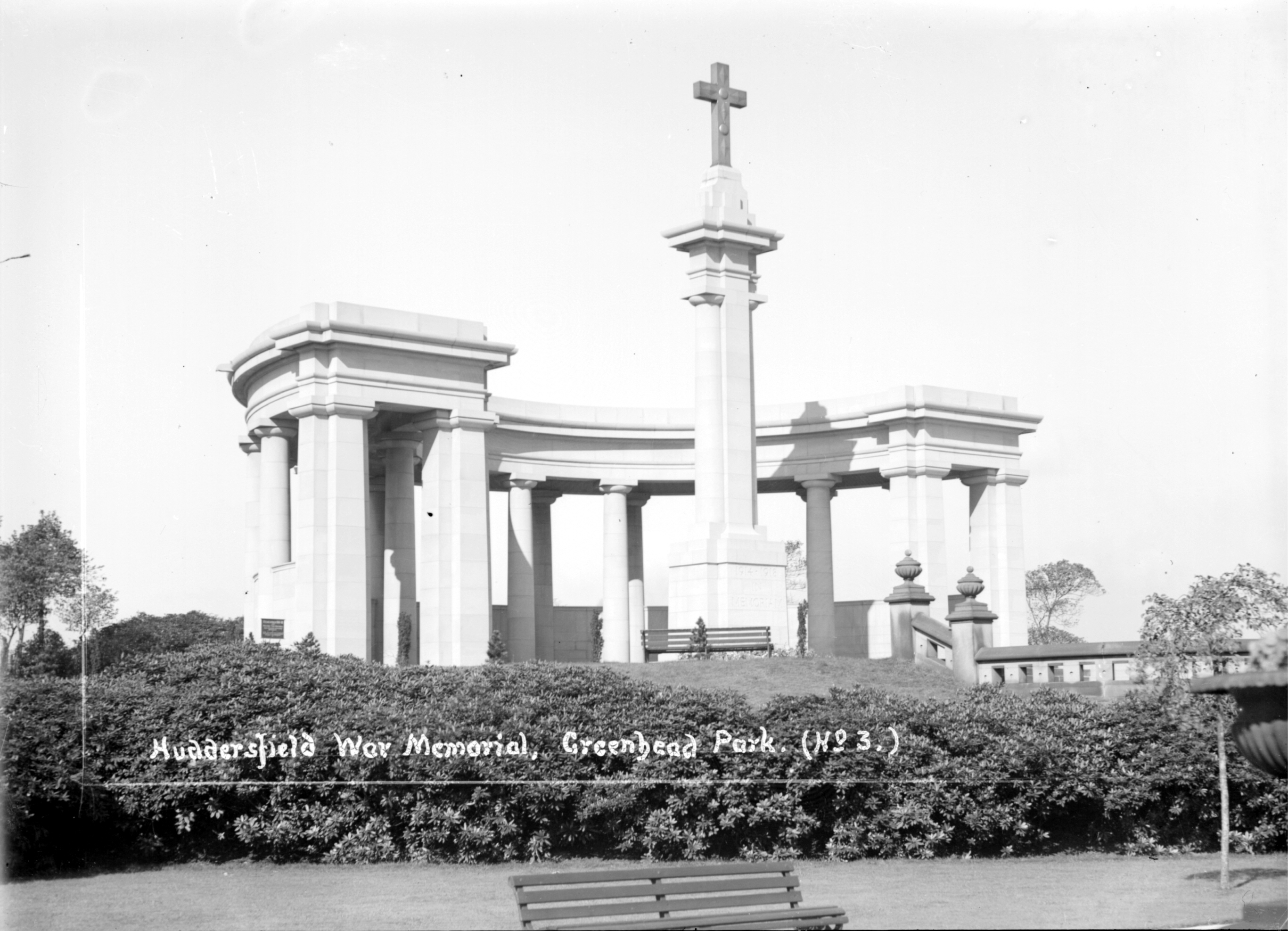
Smaller villages in Kirklees, like Golcar and Holmfirth, also created their own memorials. These became focal points for community ceremonies and events, helping people to share their grief and support each other.
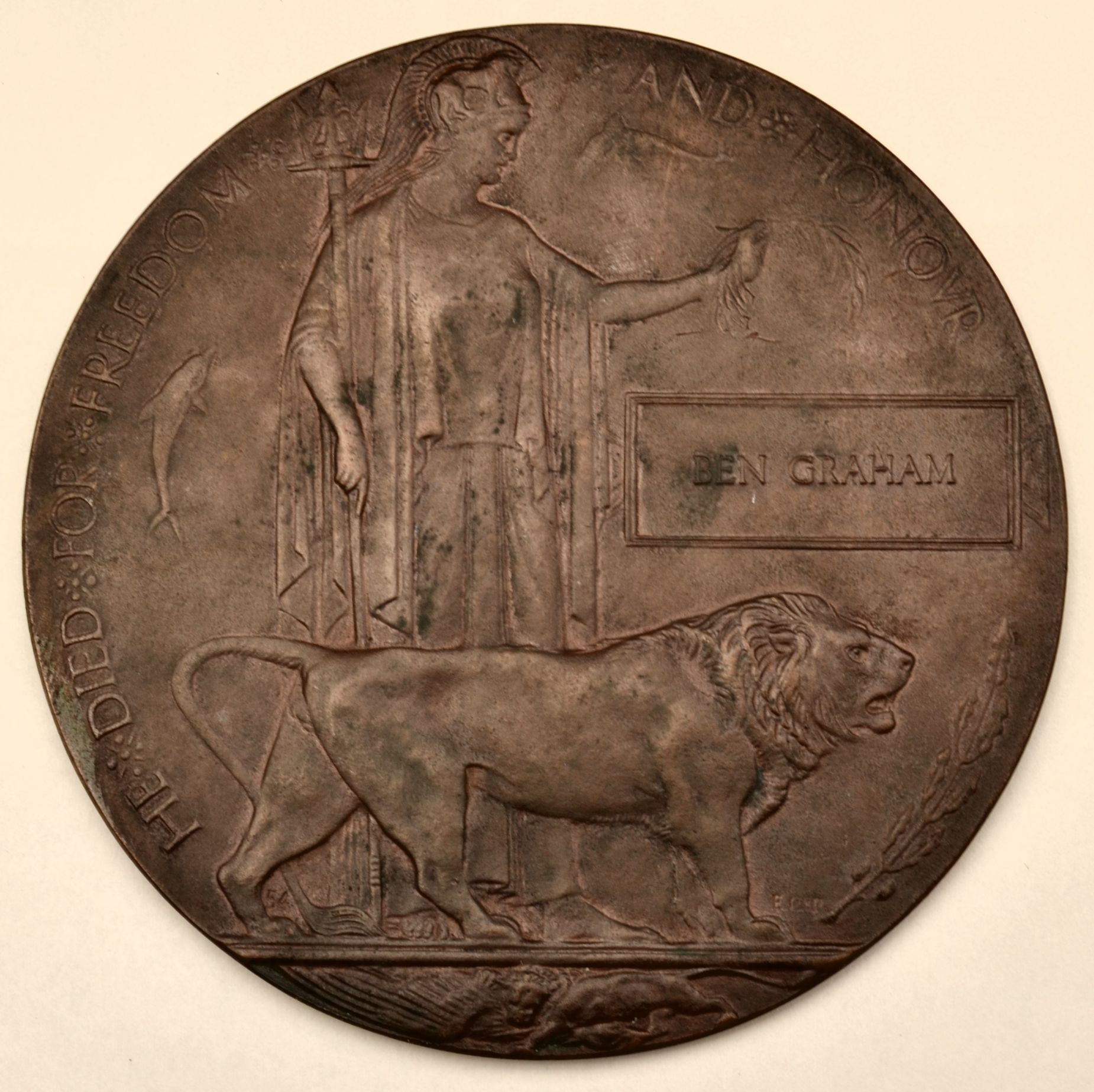
Death Pennies were bronze plaques given by the British Government to the next-of-kin of every man and woman who died in the war. This one belonged to Ben Graham of Paddock, who had been in the Royal Engineers. He died of wounds as a prisoner in Germany, 23rd September 1918.