The First World War caused a huge number of injuries, and soldiers returning from the front needed urgent medical care. As the war went on, hospitals across Britain had to expand quickly to treat the wounded. In Huddersfield and the surrounding area, local people worked hard to provide new medical facilities for those injured in battle.
At the start of the war in 1914, injured soldiers arriving in Huddersfield were cared for at the Royal Infirmary, and at a small 30-bed hospital set up at Durker Roods in Meltham. Other smaller nursing homes on Trinity Street and Bradley Lane also took in patients. As the number of casualties increased, more beds were urgently needed.
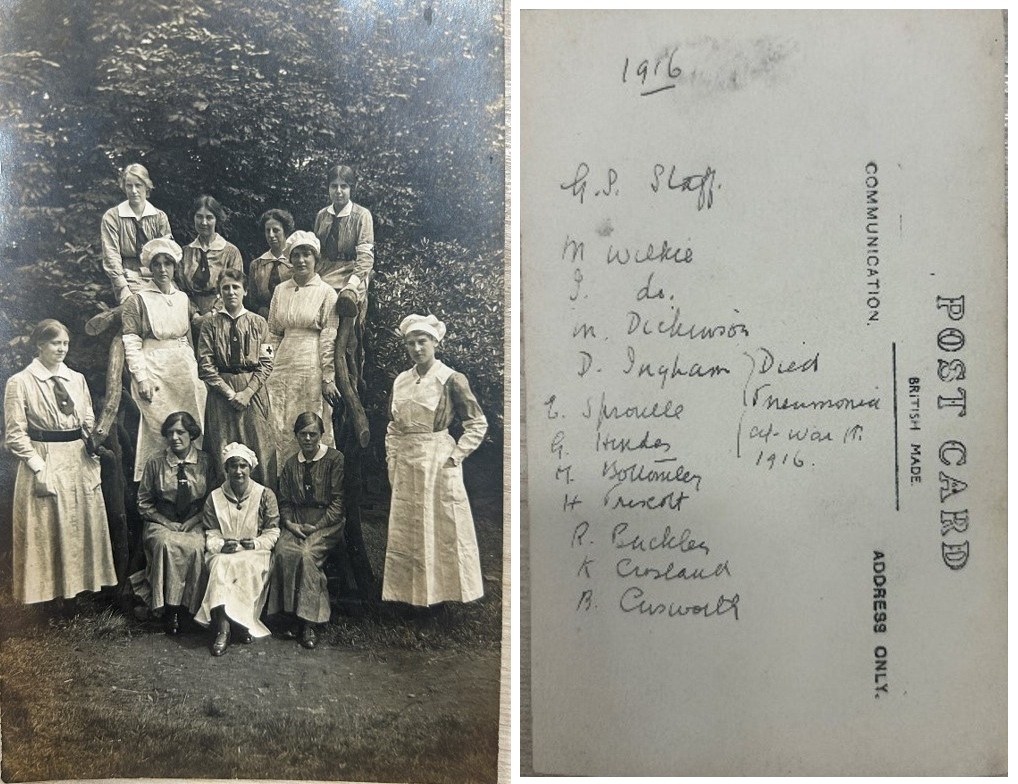
New hospitals began opening across the area. In 1915, a large military hospital was established at Royds Hall, a stately home on the edge of Huddersfield. It would become one of the main centres for caring for wounded soldiers. But this was just the beginning.
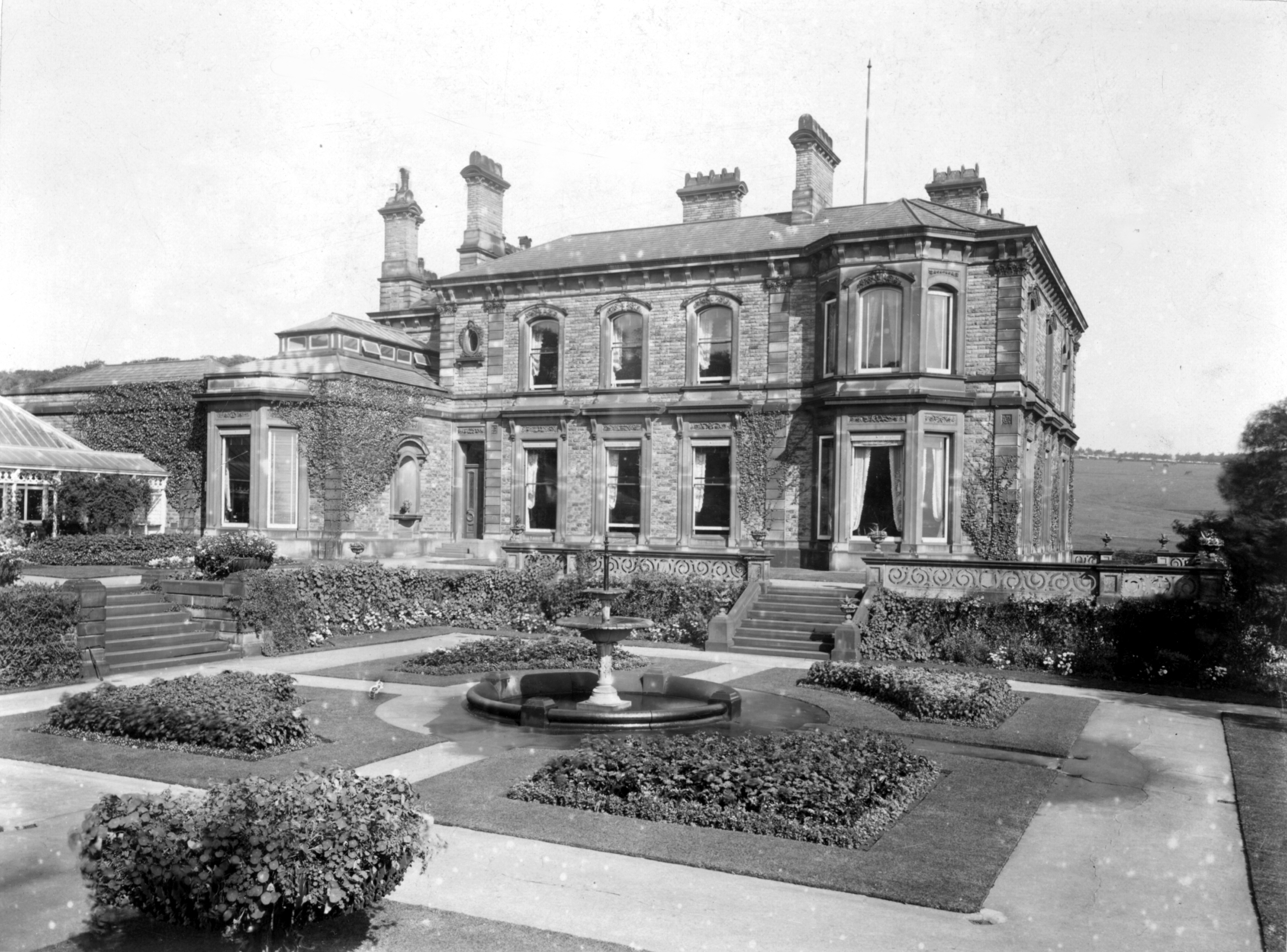
By 1917, there were nineteen auxiliary hospitals in the Huddersfield district. These were set up in buildings such as churches, chapels, Sunday schools, and even private houses.
Together, they provided more than 2,000 beds, and treated thousands of men returning from the Western Front.
One of the earliest supporters of this effort was Charles Sykes, a local textile manufacturer. He helped establish a small 12-bed hospital at Lightridge House in Fixby. Other towns such as Honley and Holmfirth also set up temporary wards that later became larger auxiliary hospitals.
In 1915, the Huddersfield Borough Council launched a fundraising appeal to raise £30,000 (which would be over £1.7 million today) to create more hospital space. At the first meeting, an impressive £12,000 was pledged. Within just five weeks, the total had reached £21,000, thanks to generous donations from people all over the district.
Work began quickly. Extra wards were built on the grounds of Royds Hall using asbestos and timber, materials commonly used in building construction at the time, with canvas shutters on one side of each ward to let in fresh air. Incredibly, the entire hospital was completed in just three months. On 4th October 1915, the new Huddersfield War Hospital was officially handed over to the military, opened by the Mayoress of Huddersfield.
Holmfirth Auxiliary Hospital
The Holmfirth Auxiliary Hospital was created entirely by local volunteers. These smaller hospitals provided care for soldiers who were recovering from injuries – a step between the main war hospitals and returning home. Known as convalescent care, it focused on helping patients regain strength and adjust after their treatment.
The hospital opened on 12 November 1914 in a house on Landsdowne Terrace, which was loaned by Messrs T and J Tinker of Bottoms Mill. It began with just six beds, but as the number of wounded soldiers increased, more space was needed. In 1916, prefabricated huts were built in nearby fields to expand capacity. The first of these was officially opened by Sir Berkeley Moynihan on 16 September 1916. By 1918, the Holmfirth Auxiliary War Hospital was treating up to 76 patients at a time. Although the War Office furnished and equipped the hospital and provided a small contribution of two shillings per day towards running costs, the rest was funded through local fundraising schemes and community support.
Matron Roberts, the senior nurse in charge of the hospital, played a central role in setting it up and managed it until it closed in 1919, after the war ended. As matron, she was responsible for overseeing the nurses, organising daily care, and making sure the hospital ran smoothly. Her leadership and dedication were so outstanding that she was awarded the Royal Red Cross medal by King George V, a special honour given to nurses for exceptional service.
Minnie Wood
Minnie Wood was born in Batley, West Yorkshire, in October 1880. She trained to be a nurse at Salford Royal Infirmary between 1905 and 1908, learning the skills that would later help save many lives during the First World War.
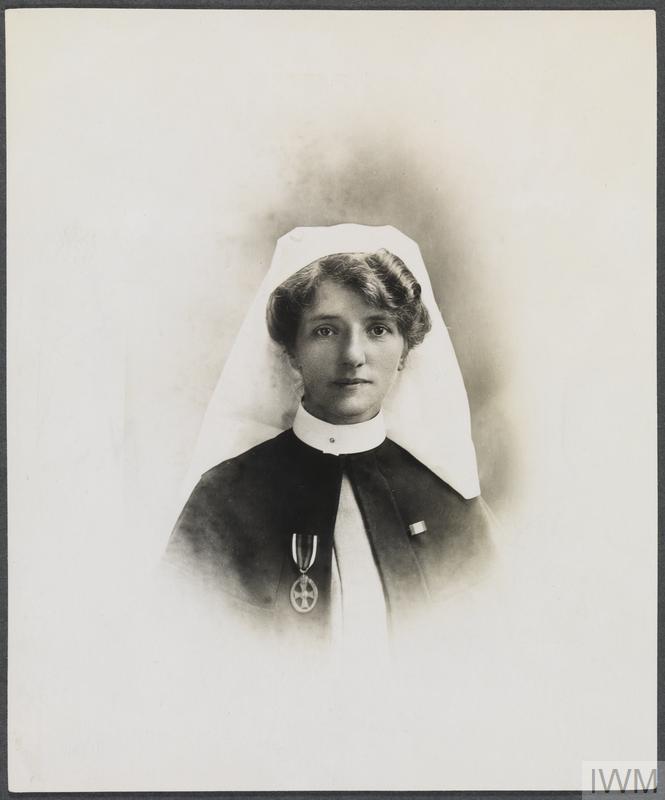
In 1912, Minnie joined Queen Alexandra’s Imperial Military Nursing Service. When the war began in 1914, she was sent to care for wounded soldiers in France and Belgium. She later continued her work in Germany after the war ended in 1918, serving until October 1919.
One of her most important roles was leading a Casualty Clearing Station (CCS) at Brandhoek in Belgium. This hospital was placed unusually close to the front line to help save soldiers with serious chest and stomach wounds. Because of its position, it was often in danger from German shelling.
On August 21, 1917, the hospital came under fire. During the attack, a fellow nurse, Sister Nellie Spindler, was hit by shrapnel and sadly died in Minnie’s arms.
Minnie showed great courage and leadership throughout the war. She was mentioned three times in official army reports (called "dispatches") for her bravery and service. She was awarded the Royal Red Cross (Second Class in 1917 and First Class in 1919) and received the Order of the British Empire (OBE) in June 1919.
Evelyn Faulder
Evelyn Faulder was born in Huddersfield. Her father, Joseph Faulder, was one of the founders of a wool business called Stothard and Faulder, which had offices in the centre of town.
During the First World War, Evelyn wanted to help. In April 1916, she joined the First Aid Nursing Yeomanry (known as FANY), a group of brave women who supported the Red Cross. They drove ambulances and helped treat injured soldiers on the front lines in France and Flanders (part of Belgium).
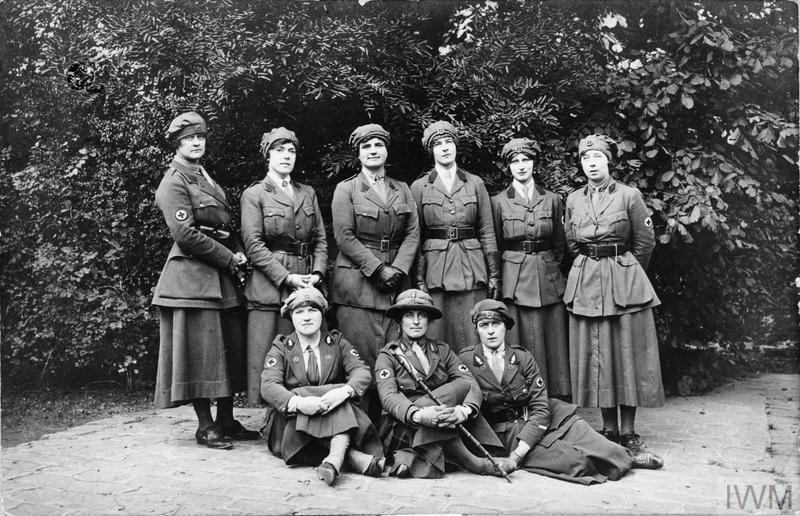
Evelyn worked in the war zone from 1916 until 1919. The job was dangerous, but she showed great courage. One day, after enemy bombs set fire to an ammunition dump, Evelyn and four other FANY members rushed to rescue wounded soldiers from the flames.
For her bravery and dedication, Evelyn was awarded the Military Medal on 5th July 1918. This medal was given as she showed outstanding courage and care during very dangerous situations.
This achievement showed the remarkable spirit and generosity of local people. They gave money, time, and effort to make sure that wounded soldiers were cared for. The story of the Huddersfield War Hospital is a powerful reminder of how communities came together to help during the most difficult times of the First World War.