Leeds has a long history of companies manufacturing food and drink in the city. Many of these products are known or marketed as local or Yorkshire specialities – but if you look a bit closer you will see that they often only exist thanks to trade links around the world.
Trade has, and continues to be, important in many industries and this is very true for food.
In the late Victorian period and early twentieth century (1800s and early 1900s) Leeds had many businesses making or selling food products. Some of them were widely known around the world, and many relied on ingredients that could not be grown locally. Port cities such as Liverpool and Bristol are usually most associated with imported foodstuffs, but thanks to transport links and the development of the Leeds Liverpool canal, it became quite easy to bring things into the city.
Originally, some of these ingredients will have arrived in Leeds as goods traded as part of the transatlantic ‘triangular trade’ in enslaved Africans. On one leg of this trade network, manufactured goods produced in the UK were shipped to the west coast of Africa, where they were exchanged for captured African people who were being sold into slavery. The enslaved Africans were crammed into ships for the next leg – the notorious ‘middle passage’ to countries in the Caribbean and neighbouring areas. Conditions on board were brutal and inhumane, and many of the kidnapped people died during the journey. The African people who survived were then sold to White enslavers and forced to work on White-owned plantations growing crops such as sugar. For the final leg of the journey, the ships were filled with raw materials harvested from the plantations and sailed back to the UK, delivering the traded goods so they could be used in factories to manufacture more products.
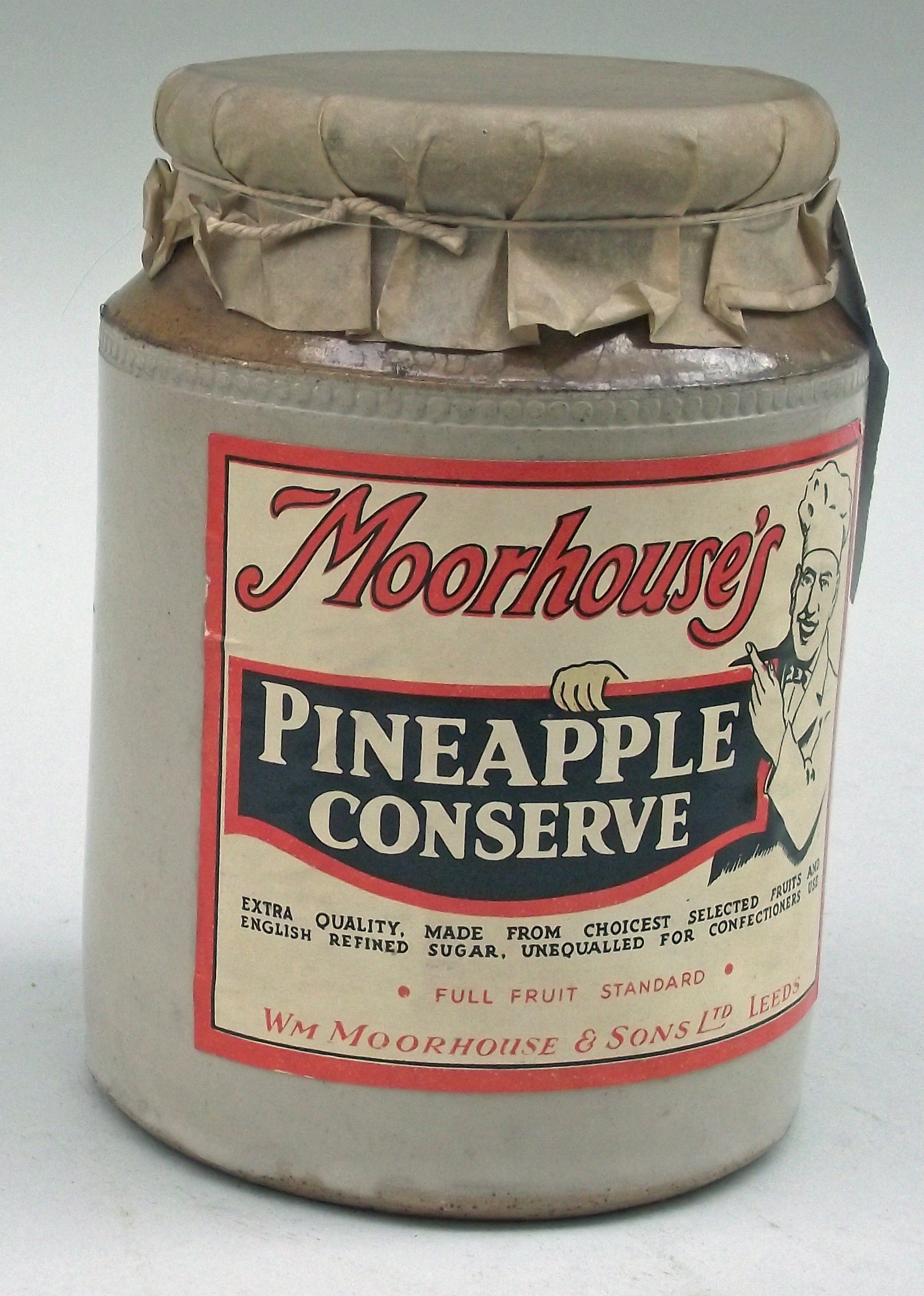
After the abolition of the slave trade in 1807, and later slavery in 1834, many of the raw materials used by local Victorian businesses in Leeds were still shipped from colonies in the British Empire. Although slavery had been abolished, the system that replaced it was indentured labour, and working conditions were barely improved.
British importers were in a much stronger position to take advantage of good trade deals and exploit the local resources in other parts of the world. Food manufacturers and companies themselves may not have directly engaged in these deals or known about working conditions on British owned colonial plantations, but their businesses relied on many of the products being brought back to the UK.
As the British Empire grew, more products were simply listed as ‘Empire Grown’ or ‘Produce of the British Empire’ – acknowledging that ingredients were not produced in Britain, but still not telling people exactly where products came from, or the conditions under which some of them were sourced or produced. This could have been for a variety of reasons such as:
- It made labelling easier and hid the fact that the ingredients were often inconsistent.
- It helped to keep the supply chains secret at a time when Britain was competing with other Empires over goods and resources
- Manufacturers may not have known or been interested in exactly where the ingredients had come from
- To hide the country of origin for political reasons – war, famine, or working conditions, for example.
Today, food manufacturers and consumers are much more aware of where their food comes from, and with modern food labelling and other initiatives people can learn more about the products they eat. Products from supermarkets and shops are much easier to research than ever before – with ingredient lists, allergy information, nutritional information and country of origin. When eating at restaurants and takeaways, however, it is much harder to find the same amount of information.
The chapters below introduce some companies who were producing food and drink in Leeds during the Victorian period and early twentieth century.