After William the Conqueror’s victory, he granted lands to his loyal supporters. The land around Huddersfield was given to Ilbert de Lacy, who built Almondbury Castle around 1150 by remodelling an old hillfort. This castle guarded and managed their estates as part of the Honour of Pontefract, a large estate controlled by the de Lacy family.
The Domesday Book
In 1086, William the Conqueror ordered the Domesday Book, a detailed survey of his kingdom’s land and taxable property. It recorded who owned what before and after the conquest. For example, the Huddersfield area was described as “waste,” meaning it was destroyed or unused following William’s harsh campaigns in the North, known as the Harrying of the North (1069–70). This survey helped William control his new lands and collect taxes, shaping the feudal system where lords governed local areas.
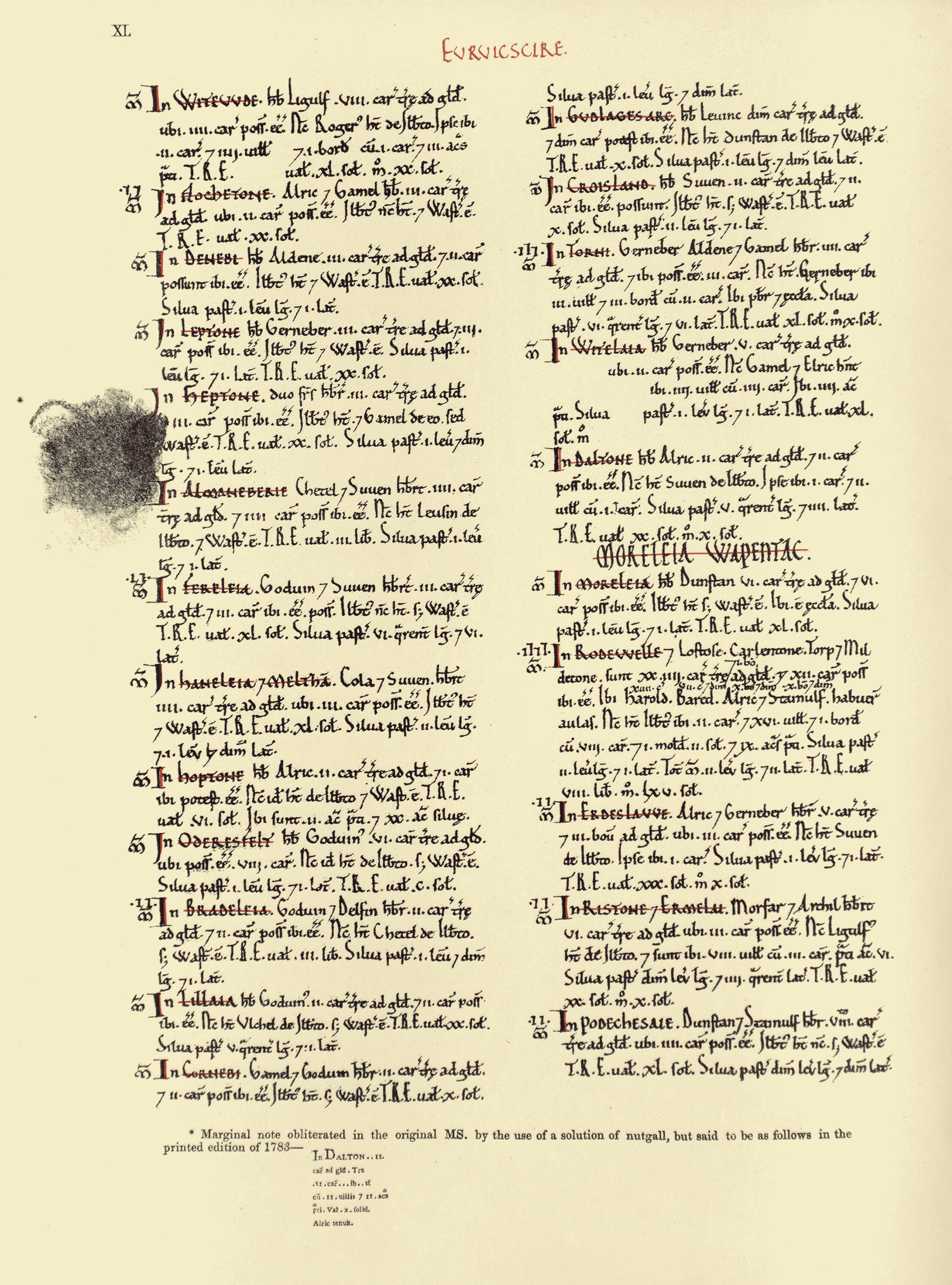
In 1086, the extract for Huddersfield said: “In Odersfelt Godwin had six carucates of land for geld where eight ploughs can be. Now, the same has it of Ilbert but it is waste. Wood pasture one league long and one wide. In the time of King Edward its value was 100 shillings” This document was originally written in Latin and later translated.
Dalton was the only local area which did not seem to have suffered during the Harrying of the North. The Domesday Book states that it had two villagers, 2 ploughlands and 2 acres of meadow. In 1086 the Tenant-in-chief was Ilbert of Lacy. The annual value was 10 shillings.
Key Events
The region experienced several significant events that shaped its history. The Harrying of the North left many areas in ruins, as recorded in the Domesday Book. The Black Death plague of 1348–50 devastated the population, leading to fewer tenants and changes in farming and land use. During the Wars of the Roses (1455–1487), local families such as the Nevilles and Percys were involved in power struggles, although no battles took place near Kirklees. Monasteries like Kirklees Priory were expected to provide hospitality and resources during these conflicts, highlighting their continued importance in local society.