In the sixteenth and seventeenth centuries, several key gentry families shaped Almondbury and Huddersfield: the Kayes of Woodsome, the Ramsdens of Longley, the Armytages of Kirklees, and the Beaumonts of Whitley. Their influence extended over land, religion, society, and politics, reflecting Tudor and Stuart Yorkshire’s changing landscape.
Kaye Family
The Kaye family of Woodsome Hall near Almondbury were prominent landowners. John and Dorothy Kaye had fifteen children, ten of whom survived to adulthood. John Kaye, who died in 1594, was a committed Protestant and the family were known for their loyalty to the Crown and the Church of England. Decorative wooden panels from their house include family portraits, coats of arms, and verses promoting obedience, order, and charity.
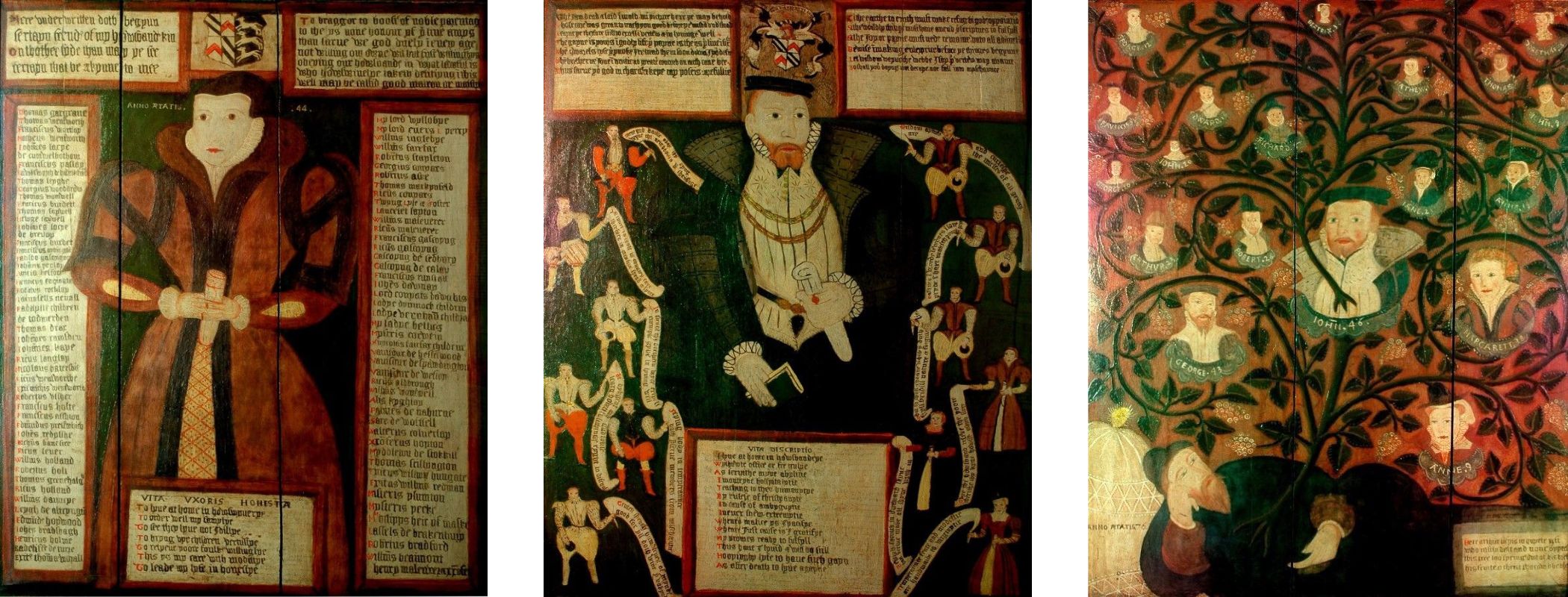
John’s verse praises Dorothy’s role as household manager: “To live at home in housewifery, to order well my family, to see they live not idly, to bring up children virtuously, to relieve poor folks willingly... to lead my life in honesty.” Their story highlights the importance of family, moral behaviour, and charity among the gentry.
Armytage Family
The Armytages became influential after the Dissolution, purchasing the former Kirklees Priory estate in 1565. John Armytage, a successful clothier, expanded the estate into a grand Jacobean house. Over generations, the Armytages became established gentry, developing Kirklees Hall and cementing their local status.
Beaumonts of Whitley
The Beaumonts were longstanding gentry in Kirkheaton, even claiming a private chapel. However, they struggled to maintain influence during the Tudor period, particularly as Protestant gentry families like the Kayes and Armytages grew stronger through religion and economic opportunity.
Batts of Oakwell Hall
The Batts family became wealthy through the cloth trade around Halifax. They did not just make cloth themselves. Instead, they owned the wool, paid other people to spin and weave it, and sold the finished cloth for profit. This gave them much more money and power. In 1583, they used this wealth to build Oakwell Hall, a large Tudor house that showed their success and stood out in the local area. Today, Oakwell Hall is a museum that helps people learn about Tudor life and the ambitions of rich merchant families in West Yorkshire.