In the Tudor period, Huddersfield was a small Pennine village with its own parish, but most trade, markets, mills, and major roads were centred on Almondbury. Towards the end of the sixteenth century, Huddersfield’s fortunes began to change thanks to the Ramsden family.
The Ramsden Family
The manor of Huddersfield was owned by the de Laci family until 1322, after which it became Crown property. By 1599, Huddersfield was still a small village with a parish, but Almondbury held the market, corn mill, fulling mill, and major roads converged there.
The Ramsden family’s story in Huddersfield began in 1531 when William Ramsden married Joanna Wade (also recorded as Joan Wood) of Longley. Joanna was the daughter of John Wood, whose family had lived at Longley for generations. When John Wood died in 1538 without a male heir, Longley passed to William Ramsden through Joan.
William Ramsden sought to elevate his family from yeoman farmers to gentry. He expanded their wealth and influence by acquiring land, including former monastic properties after the Dissolution, and was appointed Woodward General for Yorkshire, overseeing royal land.
Despite William’s successes, he faced personal challenges, including debts and imprisonment in Fleet Prison. He died without children, leaving his property to his brother John Ramsden, who stayed at Longley. John improved the estate by building Nether Longley house in 1577. The family’s rising status was confirmed when John received a coat of arms in 1575.
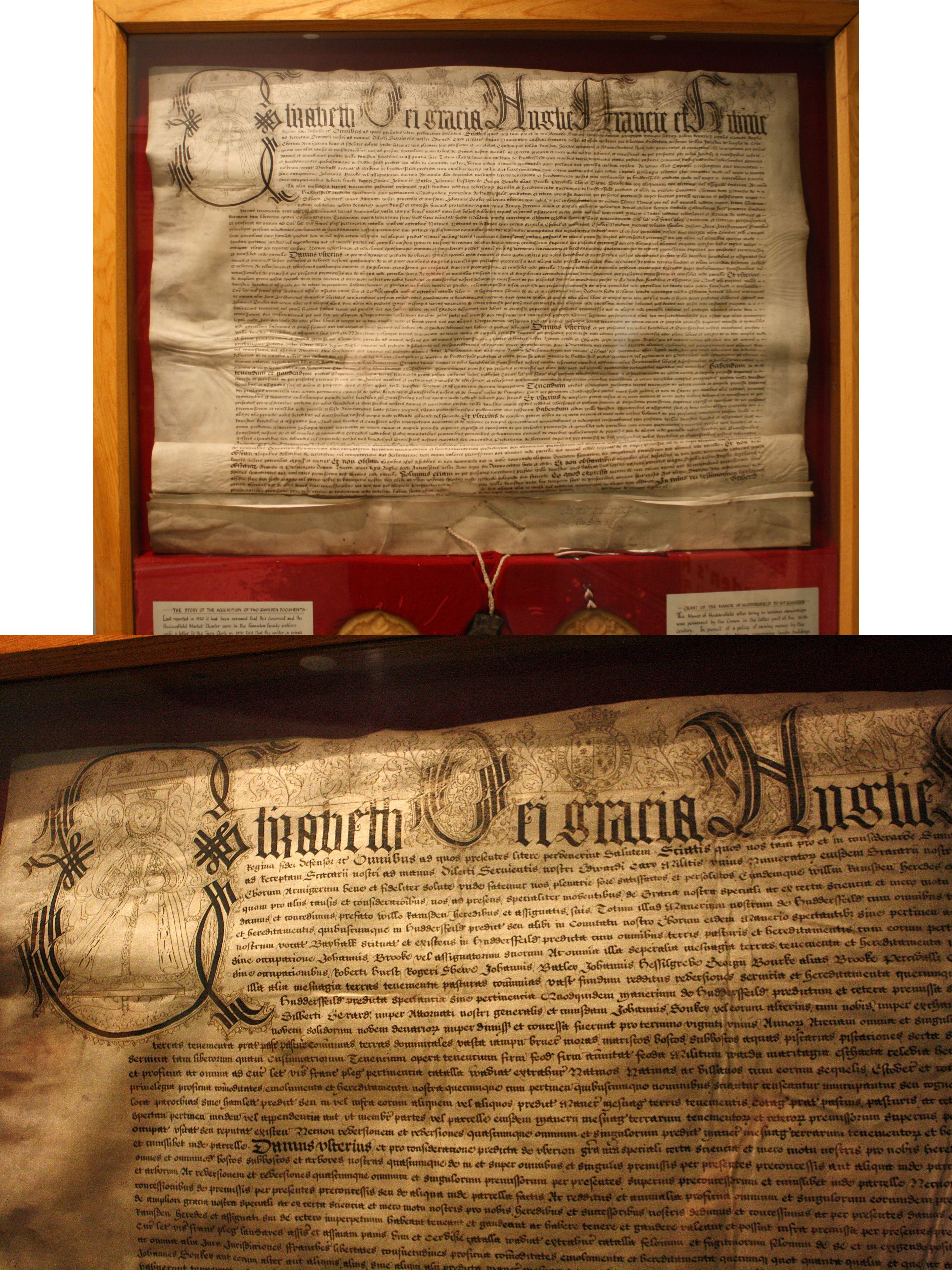
The most important step was in 1599, when William Ramsden (the nephew) purchased the Manor of Huddersfield from Queen Elizabeth I for £956 0s 9d (around £164,000 today). Though Huddersfield was still small, this purchase marked the start of its growth. Over time, Huddersfield grew to overtake Almondbury as the main district centre.
The Ramsdens were among a group of Protestant gentry families, including the Kayes of Woodsome. These families grew wealthy through landownership and trade, supporting the Church of England and promoting Protestantism after the Reformation.