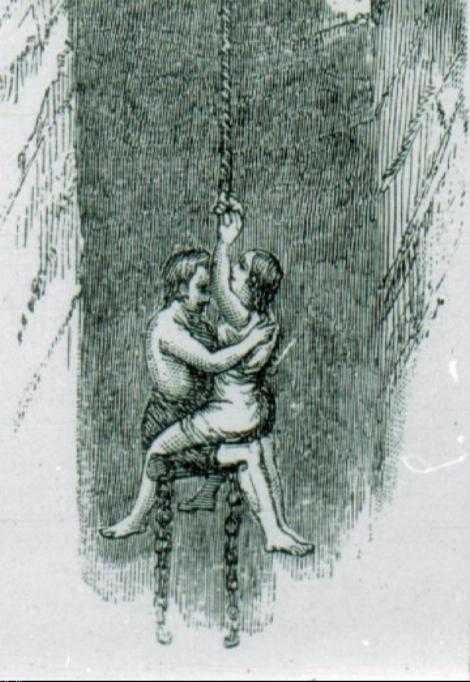
Before this law was passed, it was common for whole families to work together underground to earn enough money for the family to live on.
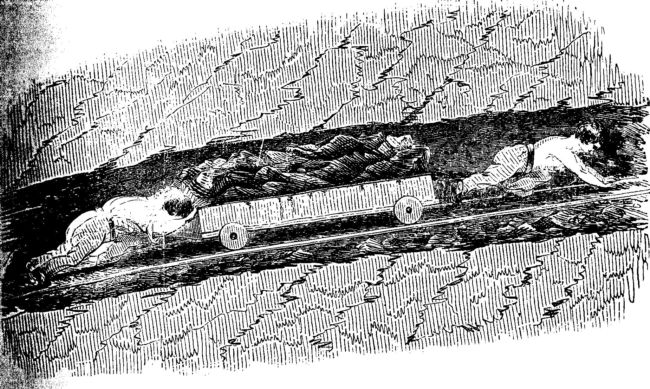
The Victorians saw child labour as a normal part of working life. Most children started work underground when they were around eight years old, but some were as young as five. They would work the same hours as adults, sometimes longer, at jobs that paid far less.
The Trapper
The trapper was often the youngest member of the family working underground. Their job was simple: to open and close the wooden doors (trap doors) that allowed fresh air to flow through the mine. They would usually sit in total darkness for up to twelve hours at a time, waiting to let the coal tub through the door. It was not hard work but it was boring and could be very dangerous. If they fell asleep, the safety of the whole workings could be affected.
The Hurrier and the Thruster
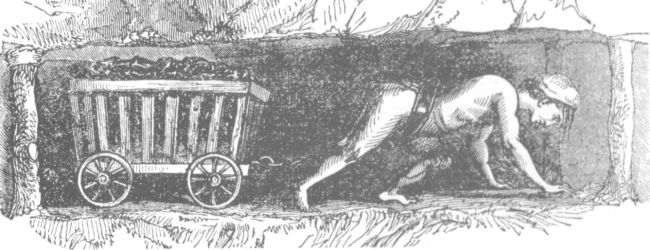
The older children and women were employed as hurriers, pulling and pushing tubs full of coal along roadways from the coal face to the pit-bottom. The younger children worked in pairs, one as a hurrier, the other as a thruster, but the older children and women worked alone.

Hurriers would be harnessed to the tub, and thrusters would help hurriers by pushing the tubs of coal from behind with their hands and the tops of their heads. The tubs and the coal could weigh over 600kg, and would have to be moved through roadways which were often only 60-120cm high.
The Getter
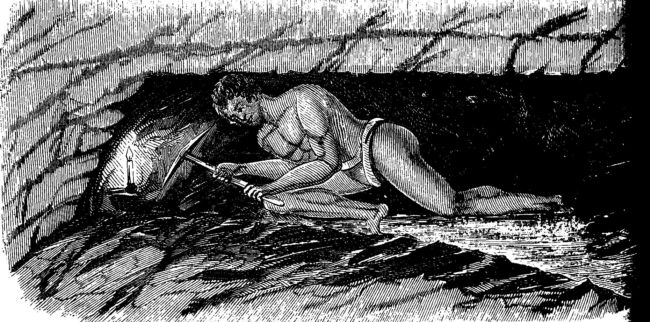
Getters were the oldest and strongest members of the family, almost always grown men or strong youths. Their job was to work at the coal face cutting the coal from the seam with a pickaxe. Getters were the only members of the family who would work continually with a candle or safety lamp, as they needed the light to see the coal face.
Activity Ideas
Use the images and information on this page to discuss the different jobs done by children. (You can download a Mining Vocabulary sheet to help with these activities).
- Role play the different jobs that children did in the mines - imagine doing them in the dark for 12 hours.
- Create illustrations of the mining jobs done by children, inspired by the images from the 1842 report.
- Discuss how the children’s health may have been affected by working underground.
- Children were also employed in other industries, such as textile mills and farms. Research other jobs done by children in Victorian Britain and compare them with those done by children in coal mines.
- Discuss the types of work children under 16 do today and modern regulations.