During the years between the two World Wars M&S transformed from Penny Bazaar to department store. Customers were still welcomed into stores and encouraged to browse and inspect goods before they purchased, but now they were greeted by polished wooden floors and gleaming counters crammed with items. These new 'superstores' were a whole new concept in shopping. Some of the household goods were removed and replaced by clothing and food, a gradual changeover which continued through the 1930s.
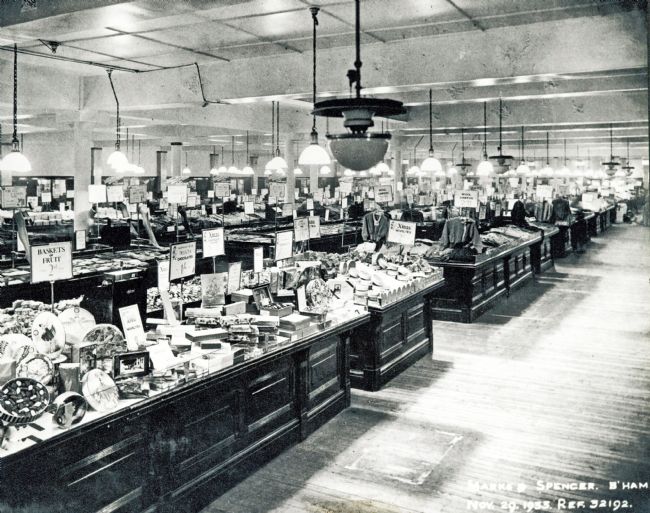
The inside of a store would have looked very different from today - lit by gas lamps and with wooden floors, which had to be coated in linseed oil every week (the oil was essential to protect and preserve the wood, helping the floor to last longer and keeping it clean and smart).
Glossary
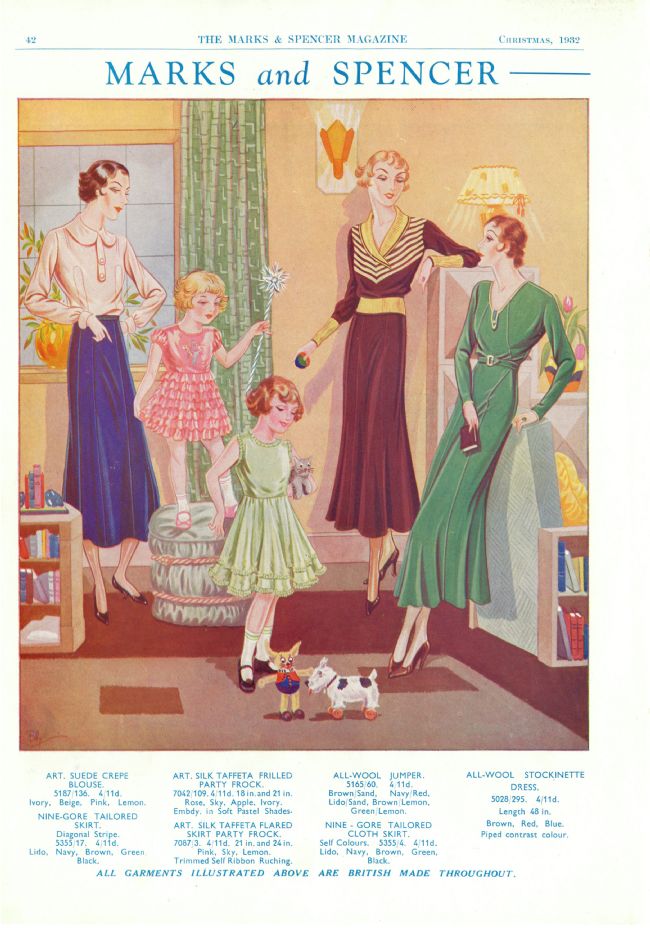
Art Deco - a style of architecture, interior design and jewellery most popular in the 1930s that used geometric designs, bold colours and outlines
Aspirational - being ambitious and desiring success
Bazaar - market, souk, marketplace
Haberdasher - a person who sells small articles for sewing such as buttons, ribbons, zips, and needles
Innovation - original, modern, novelty
Merchandise - goods, products, stock
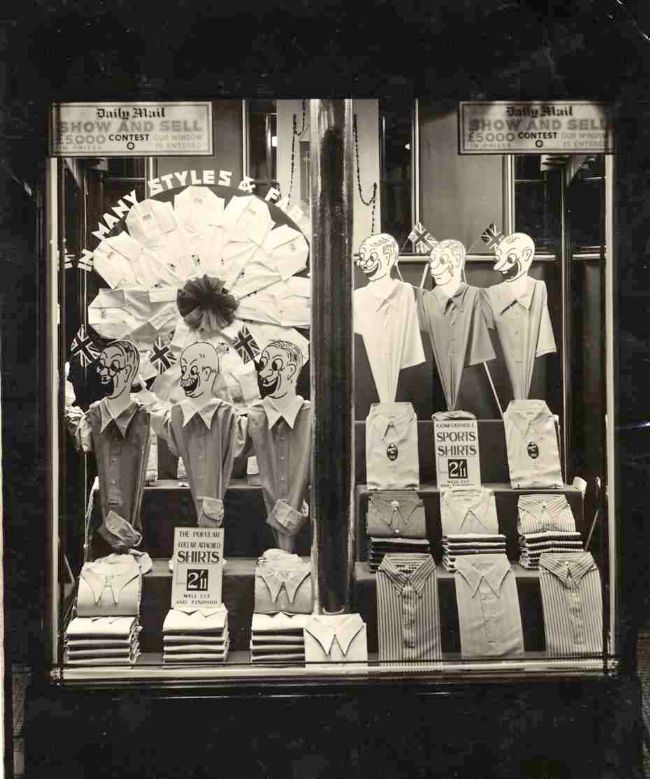
Window dressing - what is known today as visual merchandising, making window displays attractive to customers