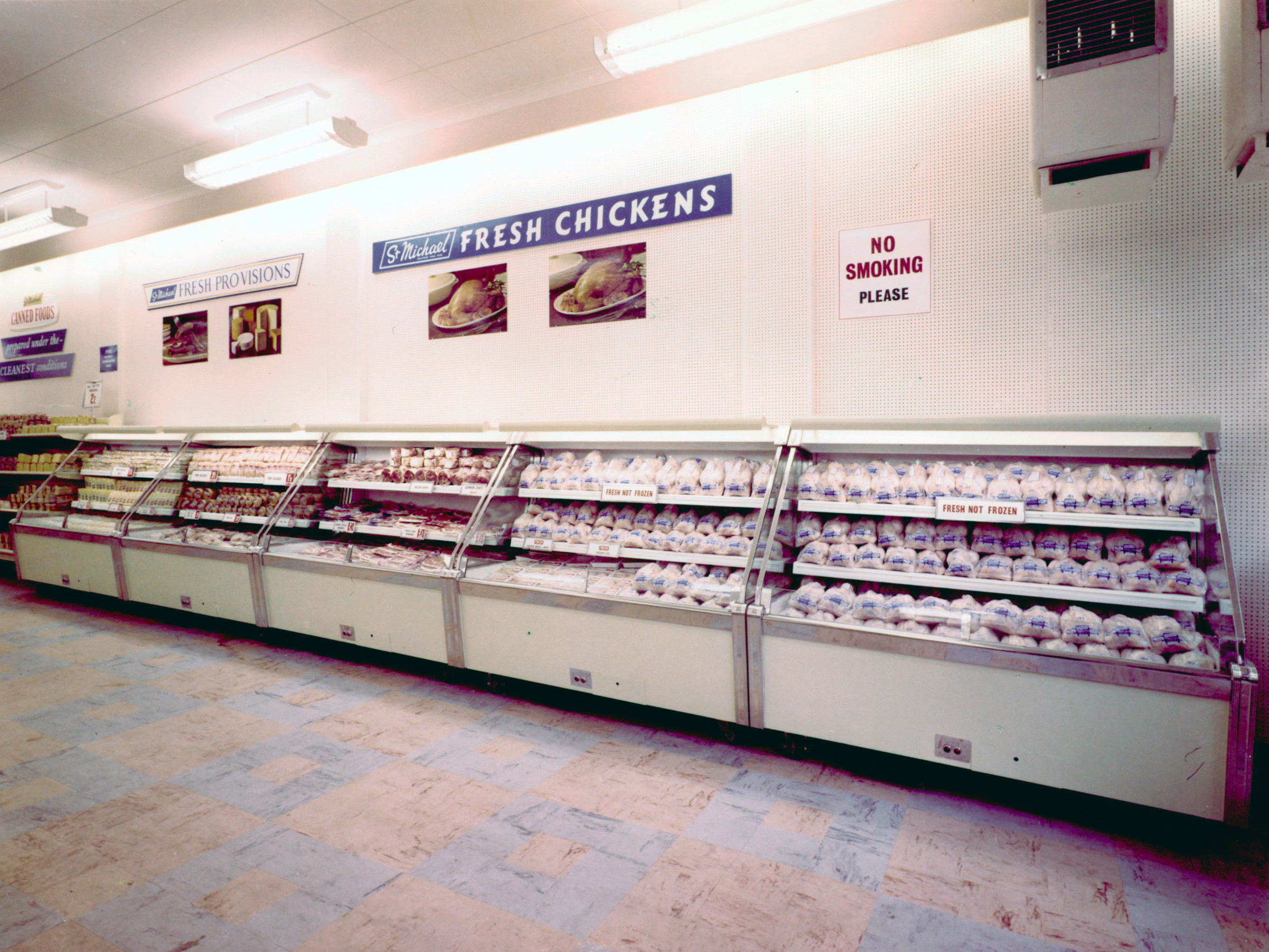
Until the 1960s, if you bought a chicken from the supermarket, it was almost always frozen. Most supermarkets sold chickens frozen because of the risks of bacteria causing food poisoning. M&S knew that customers wanted fresh products and began to explore safe ways of selling chilled meat, rather than frozen.
That’s where the cold chain came in. M&S pioneered a brand-new process to keep food chilled from start to finish. Chickens were chilled straight after slaughter, transported in refrigerated trucks, kept in refrigerated storage, and sold from refrigerated counters – all at four degrees Celsius. The entire cold-chain process was specially designed by M&S and was a big innovation at the time, helping to set new standards for food safety.
To make sure food stayed as fresh as possible, M&S also introduced date codes in 1970 - well before they were required by law. These codes helped customers know how long their food would stay safe to eat. Today, most food at M&S carries either a use-by or best-before date.
- Use-by dates are there for safety - they show the last day a food is safe to eat.
- Best-before dates are about quality - the food might not be at its very best after this date, but it’s usually still fine to eat.