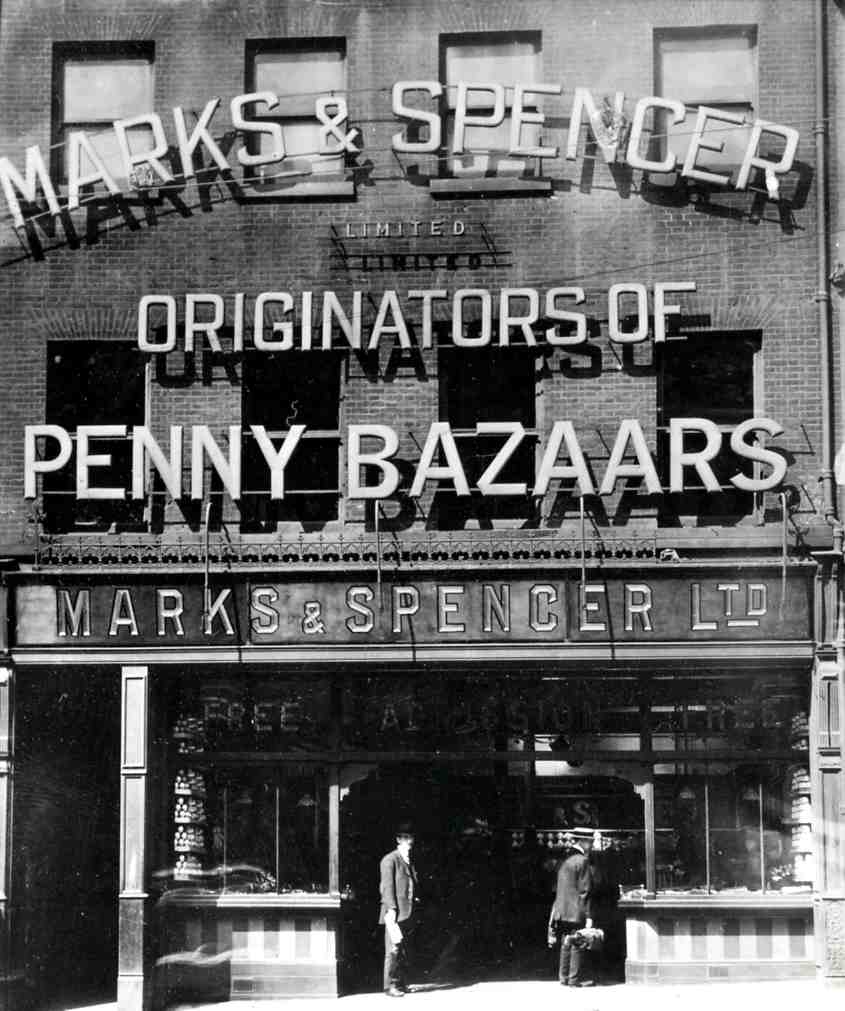
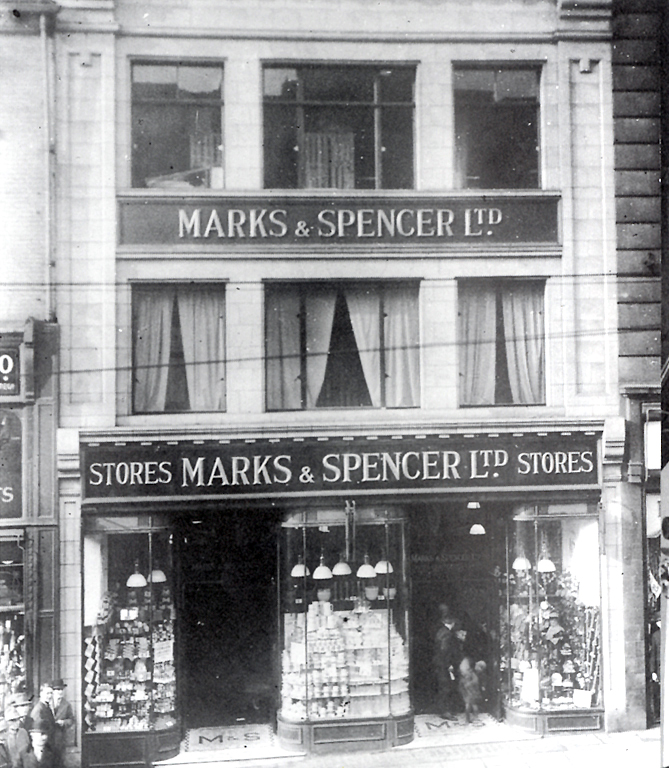
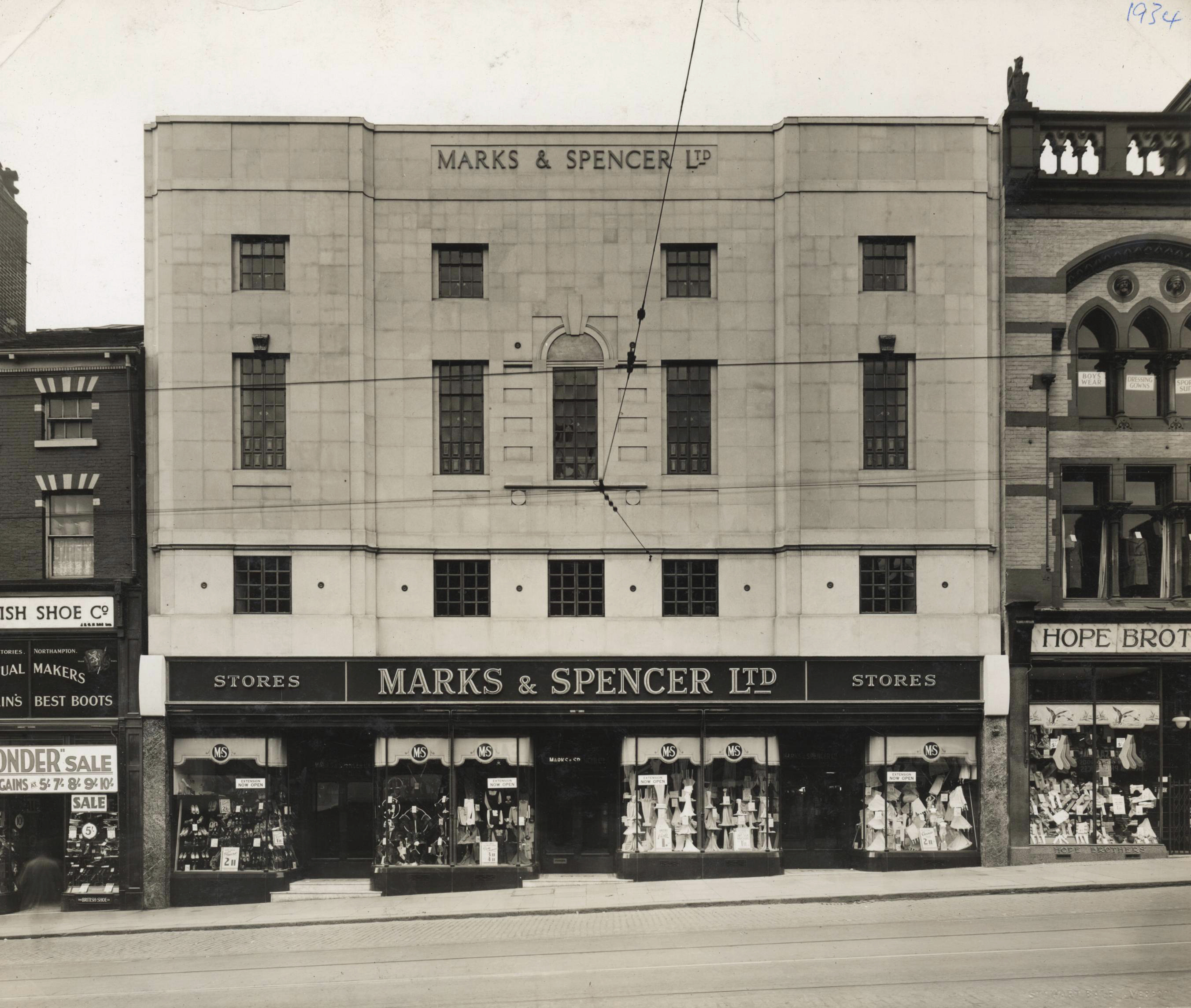
By 1907, there more than 60 M&S Penny Bazaars around the UK. In 1909 a new Penny Bazaar store opened at 76 Briggate, it was rebuilt in 1925, extended the following year and again eight years later. The 1920s and 30s were a time of great expansion for the business; prices now ranged from a penny up to five shillings and the wide selection of goods was streamlined. By the 1930s clothing and food were the largest departments.
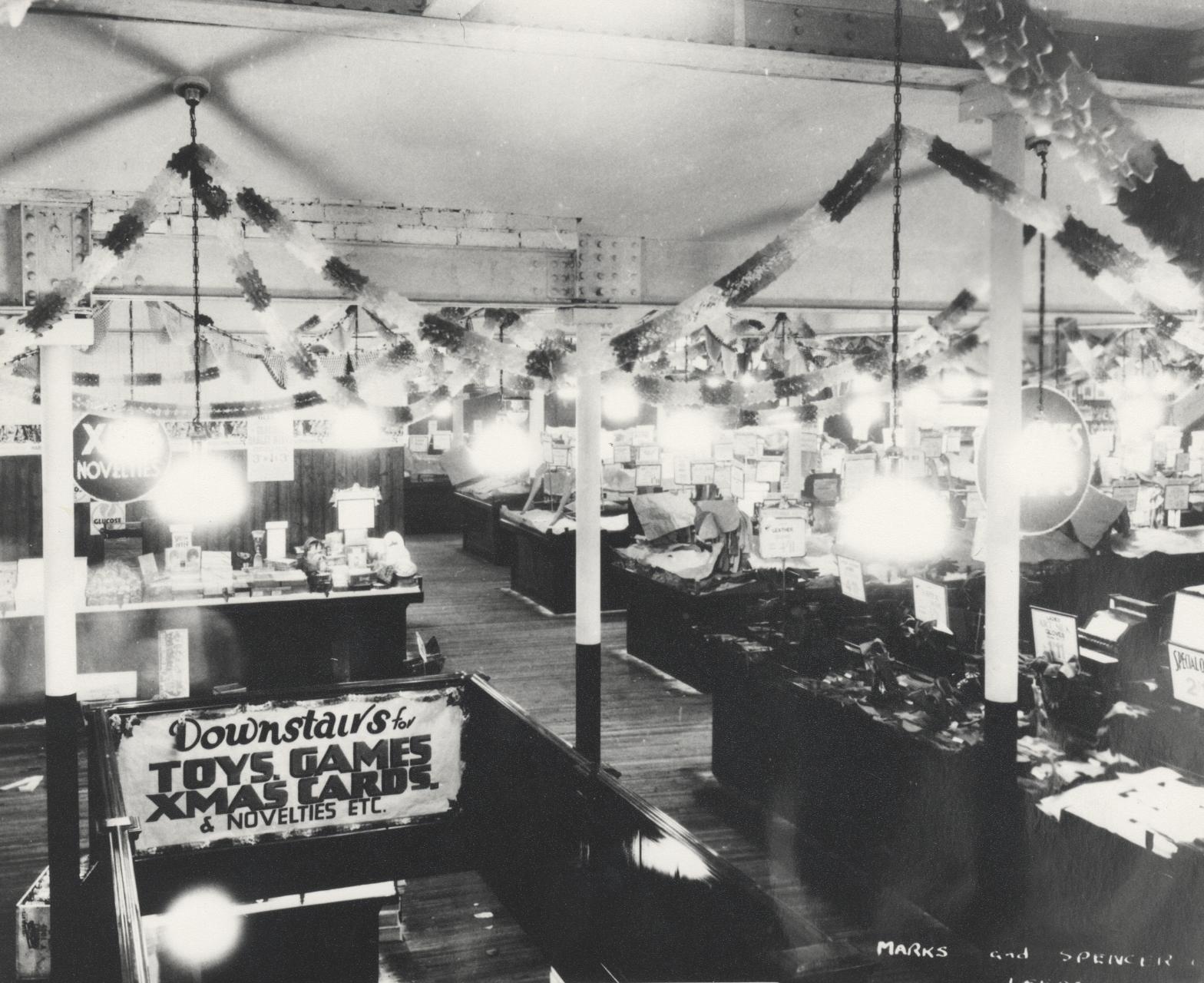
Simon Marks (Michael’s son who became M&S Chairman in 1916) travelled to America to find out more about how successful department stores were being managed in the United States. He came back with lots of new ideas and set about making M&S stores lighter and brighter, with goods displayed in elaborate arrangements.
M&S transformed from Penny Bazaar to department store. These new 'superstores' were a whole new concept in shopping. Some of the household goods were cut out and replaced by clothing and foods, a gradual changeover which continued through the 1930s.