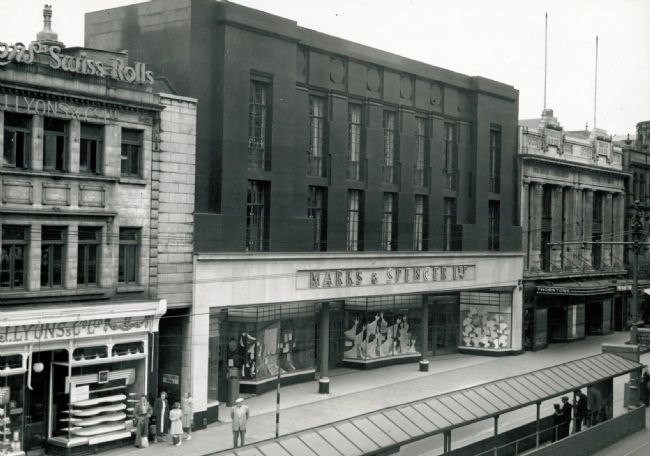
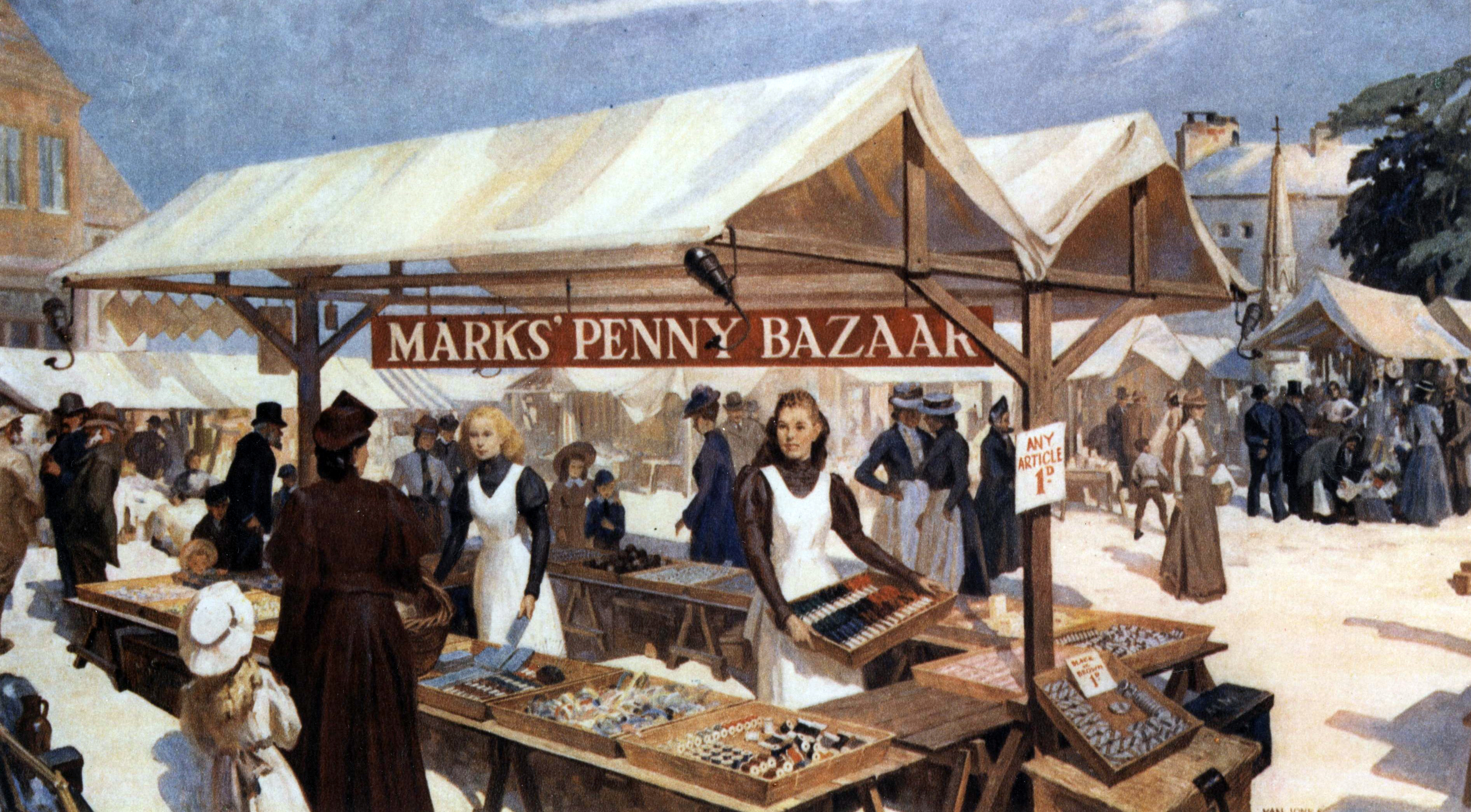
The first ever Marks’ Penny Bazaar opened in 1884 in the outdoor section of Leeds Kirkgate Market. Michael Marks classified his merchandise according to price, with one section costing a penny and marked with the slogan 'Don’t ask the Price, It’s a Penny'. This was so popular that he quickly stopped selling anything that cost more than a penny. The goods he sold included good quality, small items like nails, screws, pins, soap, wooden spoons, wool, and small toys.
Unlike other retailers at the time, he allowed customers to see and handle goods before deciding to buy. The stall was very successful, and Michael was soon visiting different markets held on different days in other nearby towns. By 1886 he was able to afford the higher rent for an indoor pitch and moved into the permanent covered market at Kirkgate.
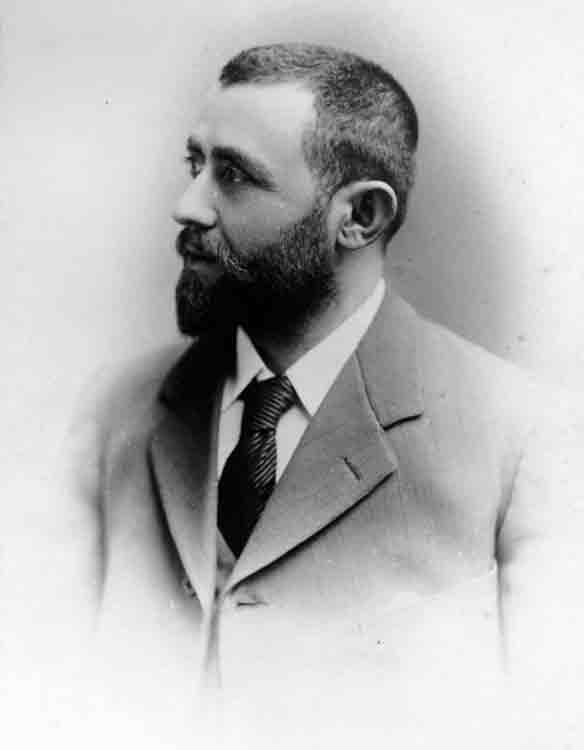
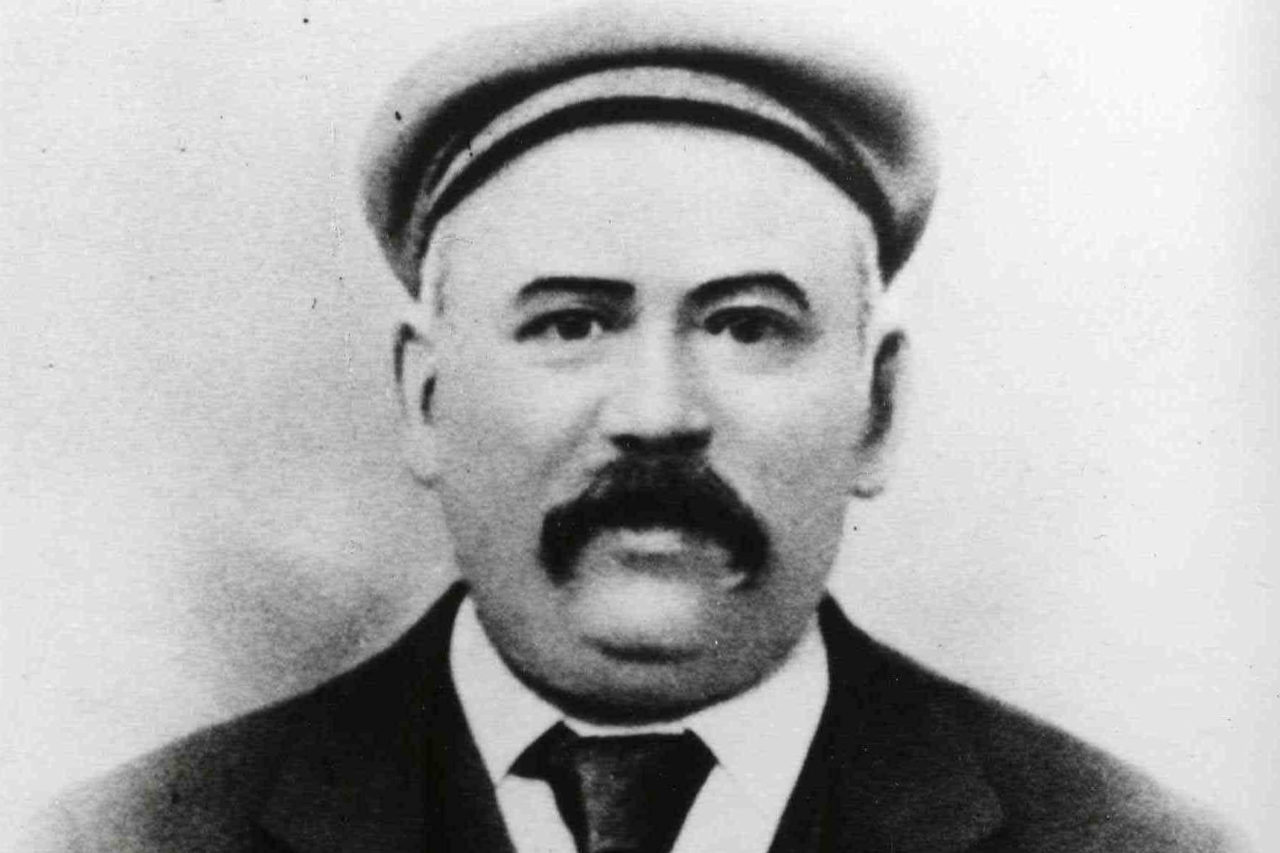
The Marks’ Penny Bazaar continued to expand, and by the 1890s Michael was looking for a business partner. In 1894 Tom Spencer took on that role, investing his life savings in the partnership - Marks & Spencer was born.
Expansion
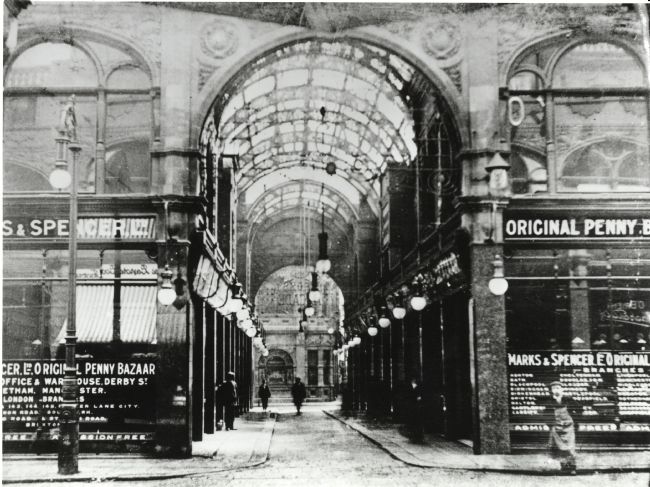
In 1904 M&S rented eight shop units on a short lease in the newly opened Cross Arcade, this became the first M&S Penny Bazaar store in Leeds. Each of the units contained a different department; hardware, china ornaments, tinware, toys, fancy goods, stationery, crockery and haberdashery.
The first day that the Cross Arcade store opened, takings totalled £75 by lunchtime, but Michael Marks declared that they would not close until they'd taken £100. They managed this by 4pm and had taken £175 by closing at 8pm.
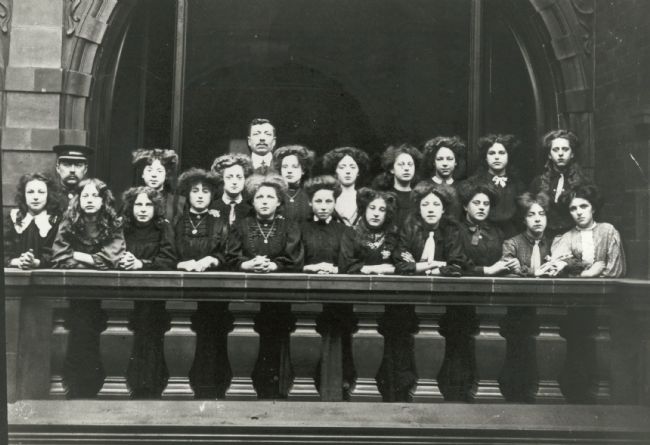
This photograph shows the staff of the Leeds Cross Arcade M&S Penny Bazaar in about 1906. The manager was Mr Ratner (centre back). Fifth from right on the front row is Mrs Gertie Swidenbank (nee Nicholson) who worked in the tinware section. Gertie is about 16 in this picture.
Gertie remembered tea being provided at lunchtime; the sales assistants took turns going up to the staff room 15 minutes early to boil the kettle and prepare the tea. They would bring their own food for lunch and had two cookers to warm it up. The Penny Bazaaropened Monday-Friday until 8pm, and until 10pm on Saturdays. Full-time pay was 7s 6d a week, a good wage at the time. The Cross Arcade Penny Bazaar closed in 1910.
Modernisation
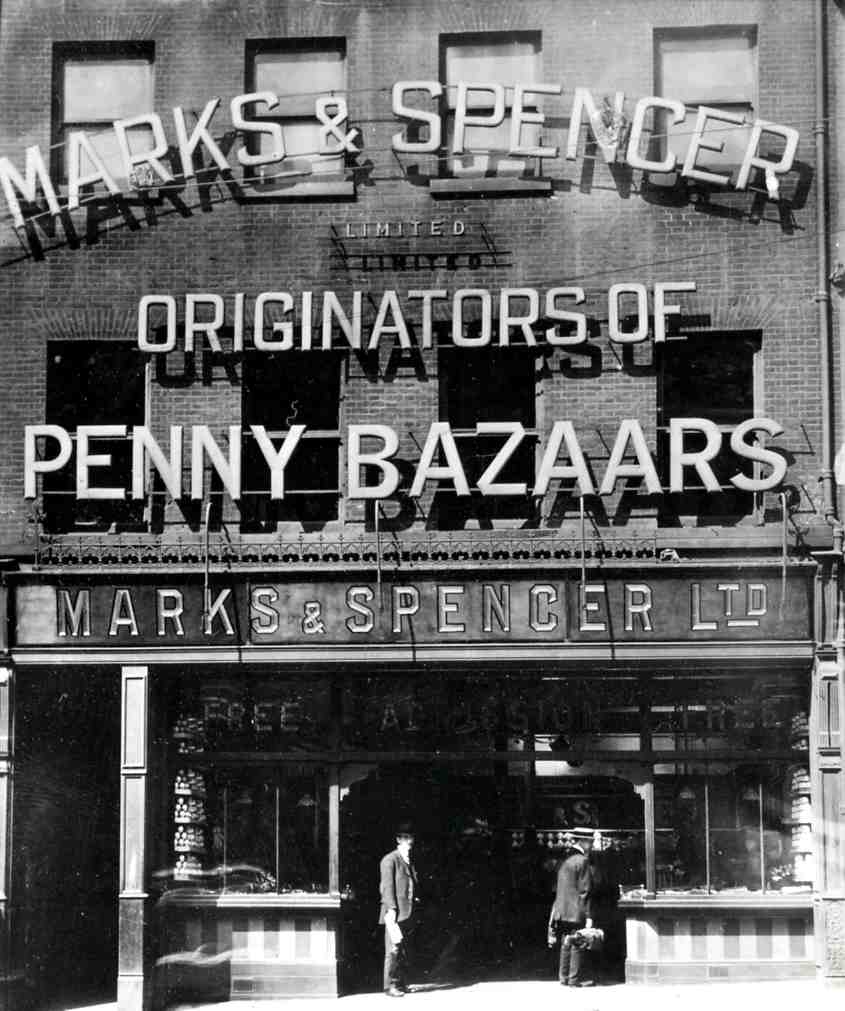
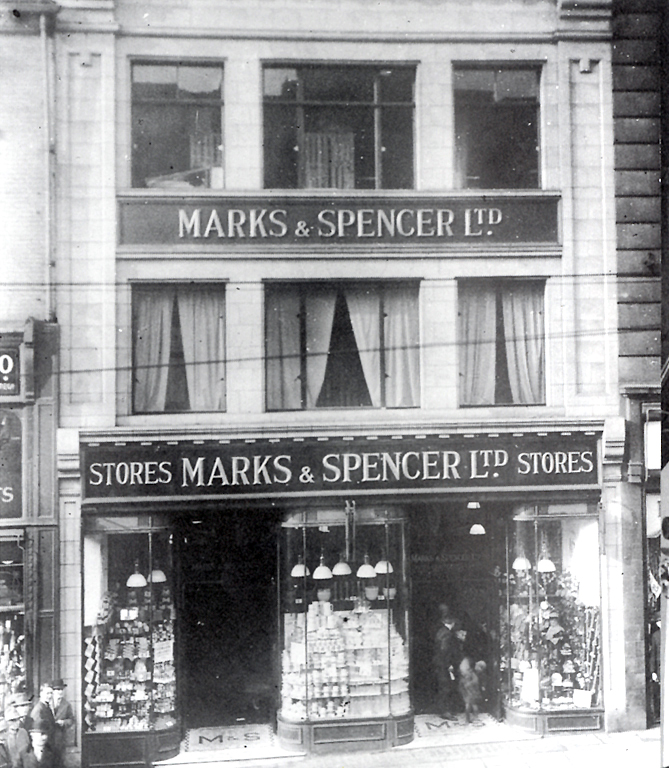
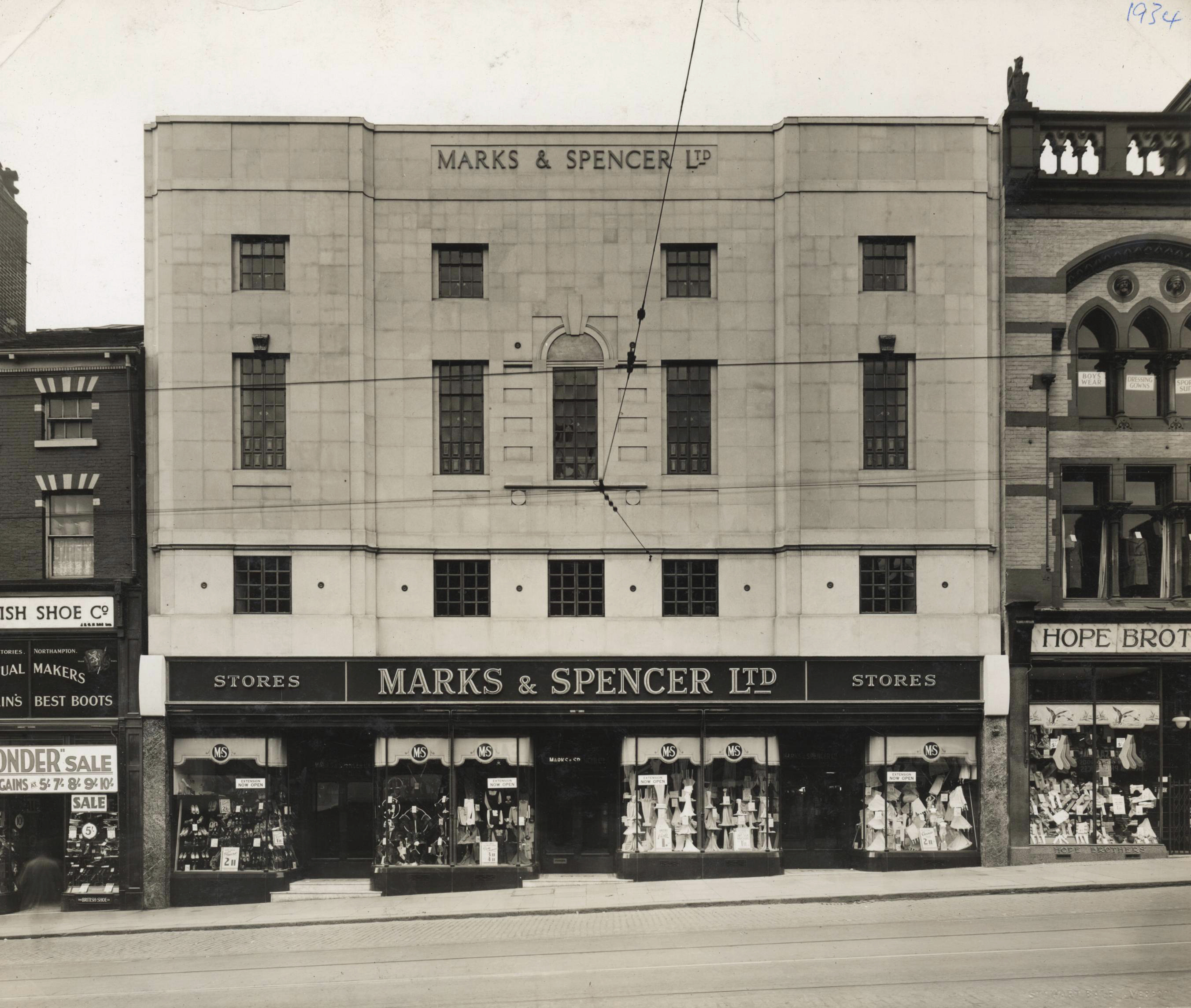
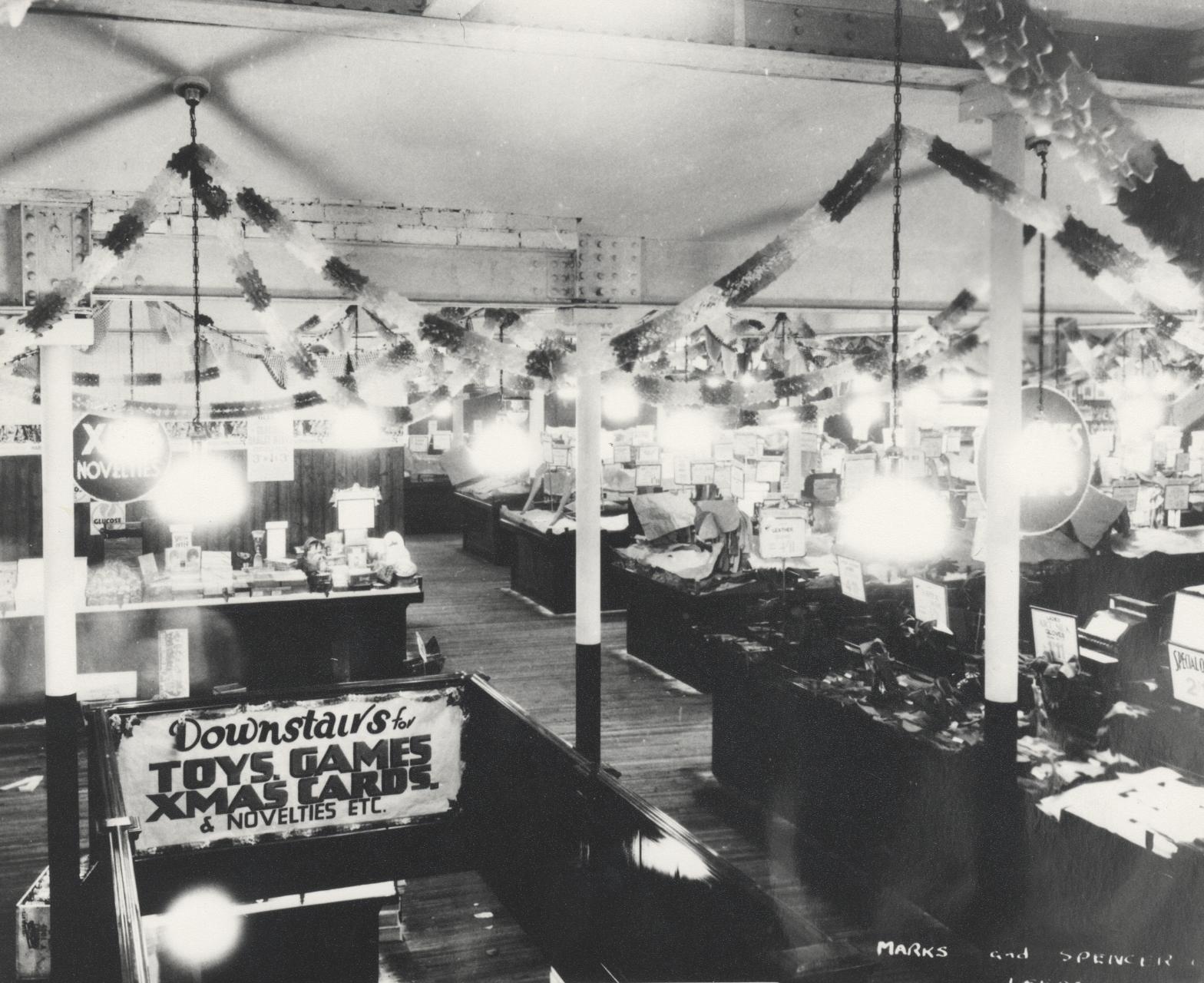
By 1907, there more than 60 M&S Penny Bazaars around the UK. In 1909 a new Penny Bazaar store opened at 76 Briggate, it was rebuilt in 1925, extended the following year and again eight years later. The 1920s and 30s were a time of great expansion for the business; prices now ranged from a penny up to five shillings and the wide selection of goods was streamlined. By the 1930s clothing and food were the largest departments.
Simon Marks (Michael’s son who became M&S Chairman in 1916) travelled to America to find out more about how successful department stores were being managed in the United States. He came back with lots of new ideas and set about making M&S stores lighter and brighter, with goods displayed in elaborate arrangements.
M&S transformed from Penny Bazaar to department store. These new 'superstores' were a whole new concept in shopping. Some of the household goods were cut out and replaced by clothing and foods, a gradual changeover which continued through the 1930s.
M&S Cafe Bars
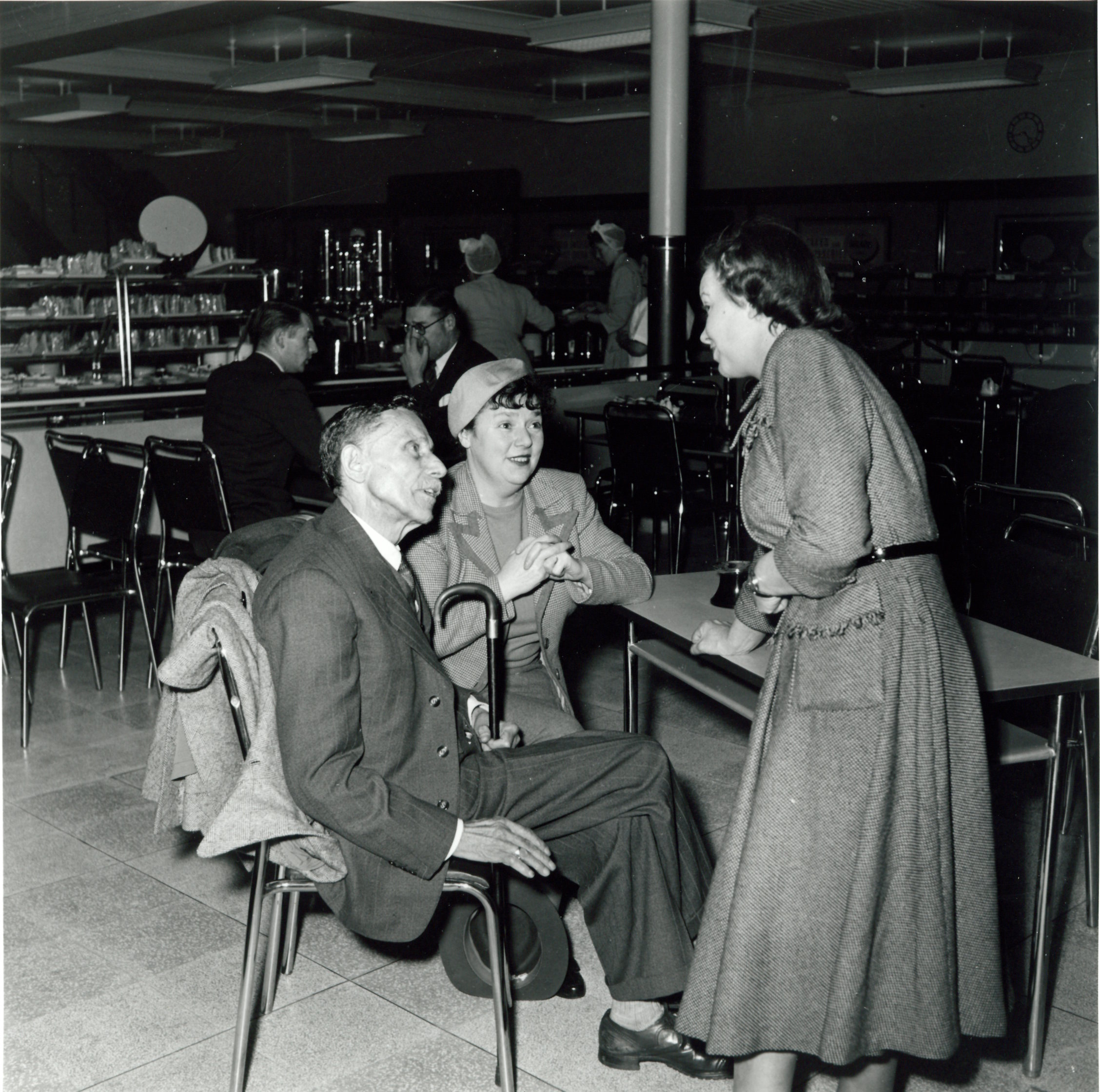
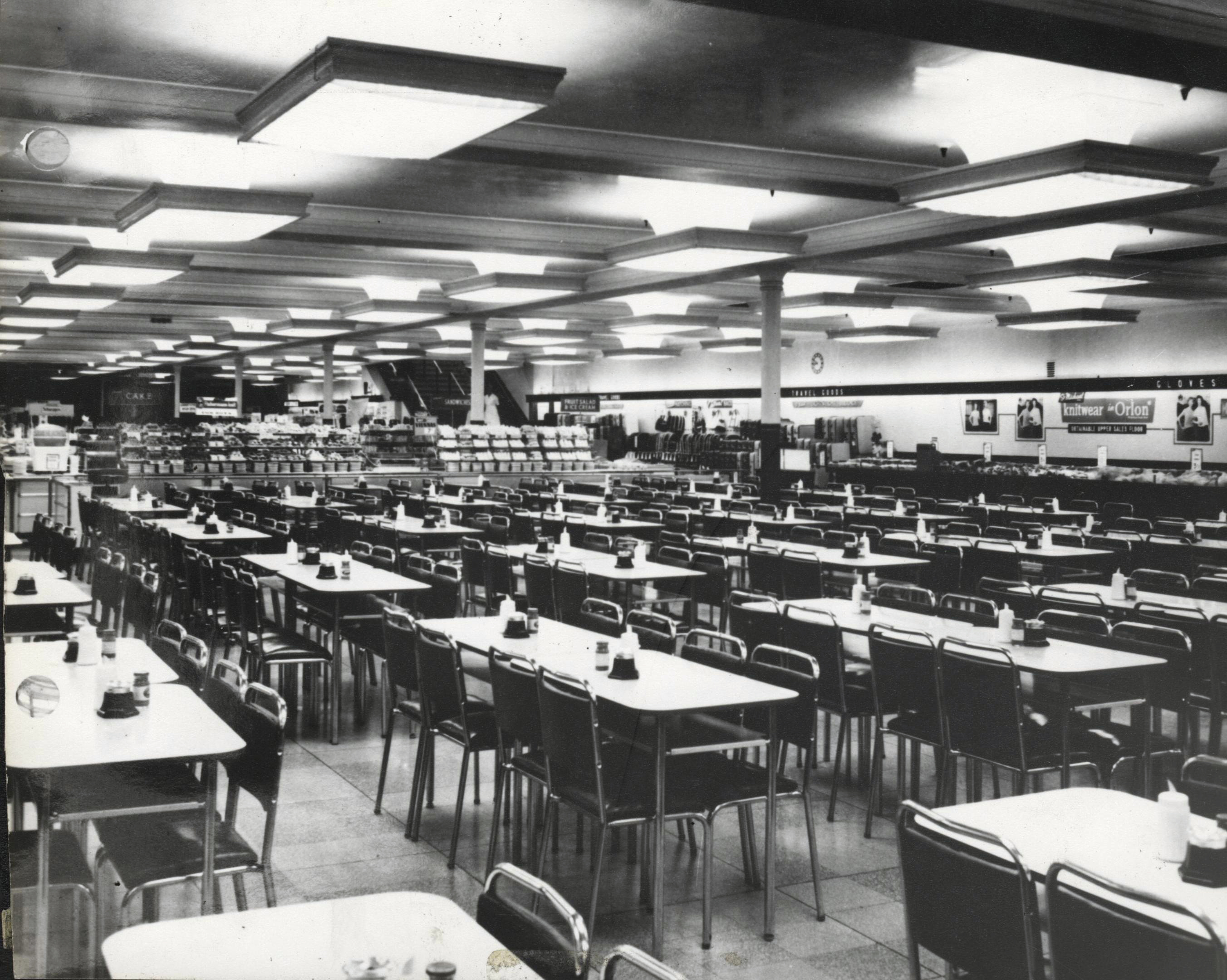
One of the first M&S Café Bars opened in Leeds in 1935. Once war broke out, the Café Bars became even more popular because customers could pay with cash and didn't have to use their ration coupons. But after the war there was less demand, and the Leeds Café Bar was closed in 1961 (one of the longest running in the country). Leeds was at the forefront again when The Coffee Bar (M&S Cafés) was reintroduced in 1997 (see also M&S: 70 Years of In-Store Cafés for an overview of café bar culture).
On 15 March 1951, 47-49 Briggate opened as a new M&S superstore. The plot of land had been purchased by M&S in 1939, with the Rialto cinema being demolished at 46 Briggate to make way for the new store. But at the start of the Second World War, the new building was taken over by the Ministry of Works for storage, and the sub-basement was used as an air-raid shelter. Finally, in 1951 the store was ready to open (the existing M&S store at 76 Briggate closed earlier in the same month).
Most new M&S stores at this time had a similar appearance. They were designed by architect Robert Lutyens. He created a design that was modern and distinctive and could also be easily adapted to fit stores of different sizes.
100 years of M&S was marked in 1984 at Kirkgate Market with a specially designed clock. Mounted on a cast iron pillar, the clock stands under the central dome in the 1904 hall, 200 yards from where Michael Marks set up his first market stall.
In 1988, M&S celebrated the centenary of Simon Marks’ birth. A clock was unveiled on the front of the Briggate store on 9 July 1988 as a tribute.
In 2013 the Briggate store was extended again, this time into the newly opened Trinity shopping centre. A second café was also added and the M&S Heritage Stall at Kirkgate Market was opened. Visitors to the stall can learn about the remarkable story of M&Swhile enjoying a coffee and picking up gifts and souvenirs.