These images represent a snapshot of how packaging has developed at M&S. You can download the full timeline (in PDF format) using the links below.

1903 -1905 M&S Branded Paper Bag
Pre-1900 - M&S sold small, simply packaged items such as buttons in the Penny Bazaars.
1900s - First M&S branded carrier bags, the earliest had an illustration of the Head Office building in Manchester and listed all the stores in the country.
1930s - Luxury goods were sold alongside homewares, and paper bags featuring art deco designs projected a message of elegance and sophistication .

1930s M&S Branded Paper Bag with Art Deco Design
1959 - The St Michael brand name was featured extensively on packaging, with nearly 3,000 tons of paper being used for 410 million bags and carriers in this year alone.

1950s M&S Branded Paper Bag
1969 - Plastic was becoming more popular as a packaging material, and at the end of the 1960s the long-term plan was to stop using paper bags altogether and replace them with plastic carriers.

1970s M&S Plastic Bag
1972 - Sell-by dates first appeared on M&S packaging.
1980s - M&S started to recycle plastic clothes hangers, meaning that the company saved money and was also looking after the planet.

M&S Food packaging Showing Recycle Logos
1991 - People began to understand that plastic bags aren’t good for the environment, and so M&S created a strong re-usable carrier bag that cost 15p.
2008 - M&S introduced a 5p charge for large food carrier bags, profits from sales of the bags were donated to charity.

M&S 100% Recycled Plastic Bag
2015 - M&S continues to look for ways to improve packaging to help keep food fresh for longer and reduce food waste.
2025 - M&S switched to paper packaging across our Men’s Essentials clothing range cutting almost 5.5 million units of plastic over the first 12 months. All men’s socks and woven pyjama sets, and almost 40% of men’s underwear lines, moved to FSC-approved paper packaging with paper hooks, which are easily recycled at home.
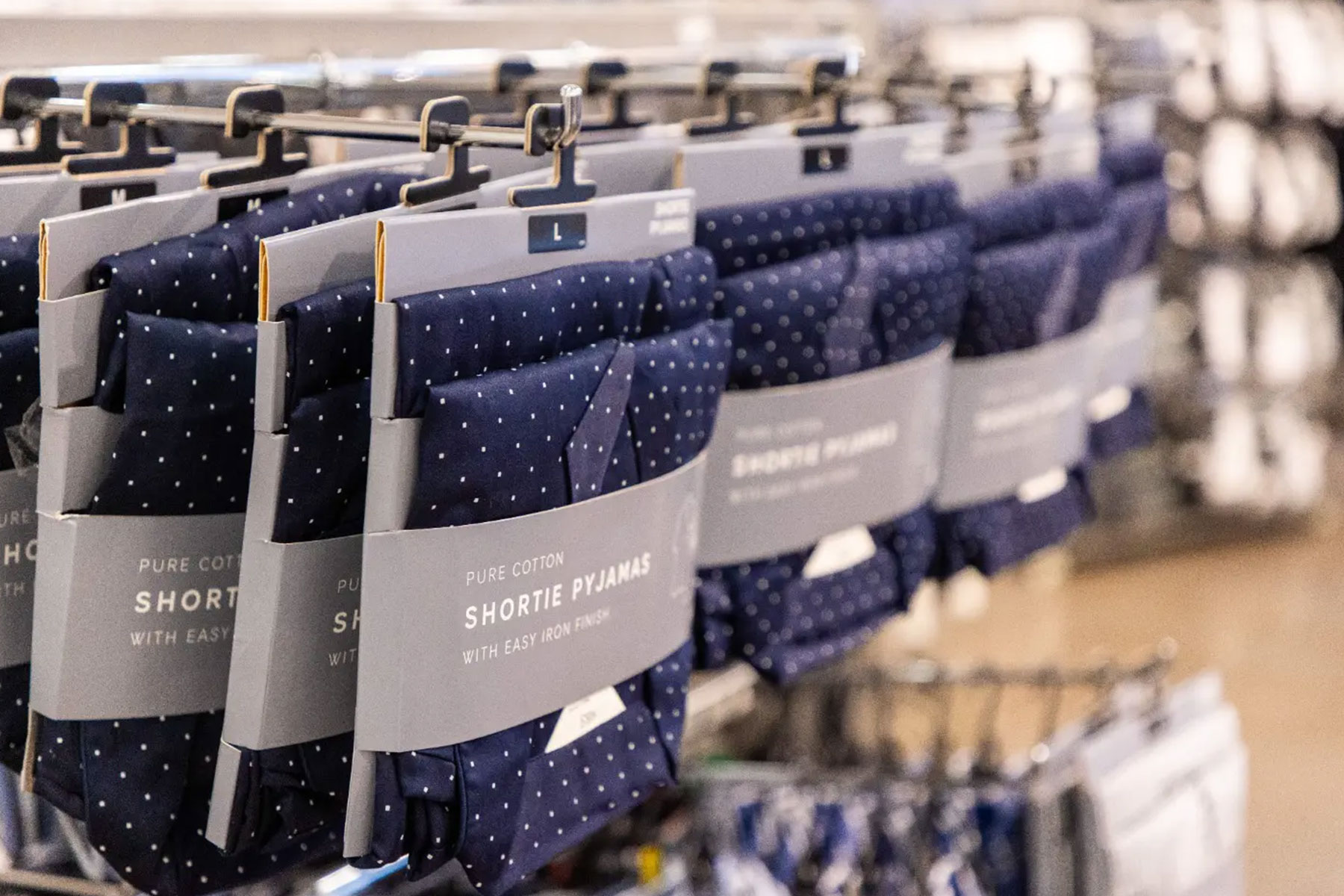
M&S Menswear Card Packaging
Glossary
Art Deco - a style in art that was popular in the 1920s and 1930s
Elegance - grace and beauty
Illustration - a picture or image; a drawing
Luxury - something that is not essential but that people like to have because it is special (can be expensive)
Sophistication - showing good taste and wisdom